TL;DR:
- Pool automation manages water, lighting, heating, and safety features automatically for convenience.
- Advanced systems use controllers, sensors, actuators, and smart devices to optimize pool performance.
- Proper planning and choosing a scalable system early prevent costly upgrades and enhance long-term enjoyment.
Managing a pool used to mean hours of testing water, adjusting chemicals, cleaning filters, and manually turning pumps on and off. That image keeps some Central Indiana families from fully enjoying their backyards. Today’s pool automation technology changes that picture entirely. With the right system in place, your pool runs itself, adjusts on its own, and stays ready whenever you are. This guide walks you through what pool automation is, how it works, which features deliver the most value, and how to plan the right setup for your home.
Table of Contents
- What is pool automation?
- How pool automation works
- Popular pool automation features
- Planning your automated pool system
- Benefits and ROI of pool automation
- Our take: what most homeowners overlook with pool automation
- Enhance your pool and your life with automation
- Frequently asked questions
Key Takeaways
| Point | Details |
|---|---|
| Easy pool care | Pool automation streamlines maintenance tasks for maximum convenience. |
| Homeowner control | Smart systems let you manage all pool functions from your phone or a central hub. |
| Better safety and savings | Automated covers and controls boost safety and can cut energy costs. |
| Plan ahead | Early planning enables seamless integration and flexibility for future upgrades. |
What is pool automation?
Pool automation is exactly what it sounds like: letting technology handle the routine tasks that keep your pool clean, comfortable, and safe. Instead of manually adjusting your pump schedule, testing your water daily, or rushing home to turn off the heater, an automated system manages all of it for you on a set schedule or in real time.
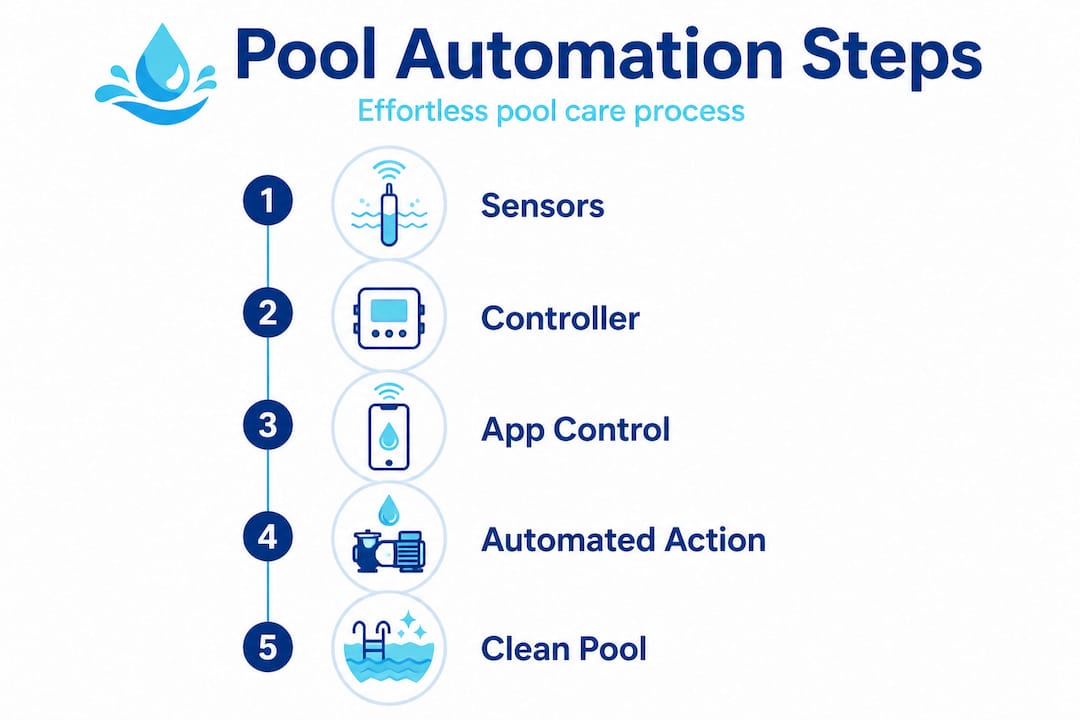
Pool automation integrates control of pumps, heaters, lights, and more into one system, often controllable by smartphone or remote. That single sentence captures why homeowners across Indianapolis are adding automation to new builds and existing pools alike.
Here’s what a typical pool automation system can control:
- Circulation pumps: Schedule run times, speed settings, and rest cycles automatically
- Heaters and heat pumps: Set target temperatures and let the system maintain them
- LED lighting: Program color themes, schedules, or event-based lighting scenes
- Sanitization systems: Automate chlorine dosing, saltwater chlorination, or UV treatment
- Pool covers: Open and close at scheduled times or via remote command
- Water features: Control waterfalls, jets, and bubblers with a tap on your phone
The control hub for all of this is typically a central panel installed near your equipment pad. From there, pool automation systems connect to individual devices using wiring and wireless modules. Many systems also integrate with smart home platforms like Amazon Alexa or Google Home, so you can manage your pool the same way you control your thermostat or lights.
Eliminating manual adjustments does more than save time. It reduces the chance of human error, keeps your water chemistry more stable, and extends the life of your equipment by running it at optimal times and speeds.
How pool automation works
After understanding the basics, it’s helpful to see what’s behind the scenes making these systems run. Pool automation relies on three main technology layers working together: controllers, actuators, and sensors. Each plays a distinct role.
| Component | What it does |
|---|---|
| Central controller | The brain of the system; processes commands and schedules |
| Actuators | Motorized valves and relays that physically switch equipment on/off |
| Sensors | Monitor water temperature, chemistry, flow rate, and more |
| Smartphone app or remote | Lets you view status and send commands from anywhere |
| Automation hub or panel | Houses wiring, modules, and connections in a weatherproof enclosure |
The controller receives input from sensors or from your app, then signals actuators to respond. For example, if a temperature sensor detects your water has cooled below your set point, the controller activates the heater automatically. You don’t have to touch anything.
Automation can be integrated into new pool construction or retrofitted into existing pools. This flexibility means whether you’re breaking ground on a new project or already have a pool in the backyard, automation is within reach. Retrofitting does require some additional planning, particularly around wiring and equipment compatibility, which is why working with an experienced builder matters.
Variable speed pump motors are an important part of how oversized pump systems handle different flow demands efficiently. Automation controllers communicate with these pumps directly, ramping speed up for cleaning cycles and dropping it down for quiet overnight filtration. That variable operation reduces energy consumption significantly compared to older single-speed motors running at full power all day.
Pro Tip: Before choosing an automation system, ask your pool professional which brands and protocols are compatible with your existing equipment. Not all controllers work with every pump brand or heater model, and finding out early prevents expensive workarounds later.
Popular pool automation features
Let’s look at what homeowners are actually automating and why these features matter, especially for Central Indiana’s climate and outdoor lifestyle.
Feature comparison overview
| Feature | Control method | Primary benefit |
|---|---|---|
| Variable speed pump | App, timer, or controller | Energy savings up to 90% vs. single-speed |
| LED lighting control | App or automation panel | Ambiance, security, and scheduling |
| Automatic pool cover | Remote or scheduled timer | Safety, heat retention, chemical savings |
| Smart water chemistry | Automated dosing system | Consistent water balance, less hands-on testing |
| Robotic pool cleaner | Scheduled or on-demand | Thorough cleaning without manual effort |
| AI pool visualization | Mobile app integration | Planning and ongoing pool management |
| Freeze protection timers | Automated sensor-based | Critical for Indiana winters |
Robotic cleaners and automatic pool covers are among the most impactful automation choices for improving maintenance and safety. An automatic cover, in particular, does triple duty: it keeps debris out, holds heat in overnight, and acts as a safety barrier when the pool isn’t in use. For families with young children or pets, that safety function alone makes the investment worthwhile.
Robotic pool cleaners operate on their own schedule, scrubbing walls and floors while you relax. You set the timing through your automation panel, and the robot handles the rest. No more dragging a manual vacuum around or paying for a weekly cleaning service.
Advanced features can include water chemistry monitoring and AI-powered pool visualization, giving you a smarter overview of your pool’s health and design options from your phone. Some systems alert you if chemical levels drift out of range before they become a real problem, saving you from cloudy water or equipment damage.
Here’s a list of automation features especially suited to Central Indiana conditions:
- Freeze protection timers: Indiana winters can drop below freezing without much warning. Freeze protection automatically runs your pump when temperatures approach 32°F, preventing pipe damage.
- Smart lighting schedules: Extend your outdoor evenings with automated lighting that turns on at dusk and off at a set time.
- Remote water level monitoring: Heavy spring rains or summer evaporation can shift water levels. Some systems alert you when levels fall outside the ideal range.
- Heater scheduling: Program warmup cycles so your pool reaches your preferred temperature by the time you get home from work.
- Saltwater chlorination control: Automate salt cell output based on actual demand rather than guessing.
You can explore the full range of pool automation features available for Indiana homeowners to find the combination that fits your lifestyle and budget.
Pro Tip: Bundling multiple automation features at the time of initial installation is almost always more cost-effective than adding them one at a time later. Wiring, panel space, and labor are shared costs, so plan for everything you might want upfront.
Planning your automated pool system
Once you know what’s possible, here’s how to make automation part of your pool plan in a way that avoids common pitfalls and keeps costs manageable.
Step-by-step planning process
- Identify your priorities. Start by deciding which tasks you want to eliminate. Water chemistry? Evening lighting? Cover operation? Your list of pain points drives your feature selection.
- Choose your control platform. Decide whether you want smartphone control, a wall-mounted panel, voice assistant integration, or all three. This shapes which automation brand you choose.
- Set your budget range. Entry-level systems start around $1,500 and scale up to $5,000 or more for full-featured smart pool setups. Knowing your range helps narrow options.
- Plan for future expansion. Run extra conduit and wire during installation even for features you don’t activate yet. Adding wiring after the fact is expensive and disruptive.
- Stage the installation if needed. If budget is tight, install the controller and wiring now, then activate additional features over time as you’re ready.
Planning automation features early during pool design delivers the best compatibility and value. When automation is an afterthought, you may face limitations in how components can be installed or integrated.
“Early planning means fewer costly changes later.”
Watch out for these common mistakes homeowners make during the planning stage:
- Skipping future conduit runs. Not running empty conduit during construction is the single most expensive oversight. Adding wiring after decks and landscaping are done costs far more.
- Underestimating app and network needs. Most smartphone-controlled systems require a stable Wi-Fi signal near the equipment pad. Plan your router coverage accordingly.
- Choosing a closed platform. Some budget automation brands don’t integrate with popular smart home systems. Choose an open or widely supported platform to avoid being locked out of future upgrades.
- Forgetting about your hot tub. If you have or plan to add a spa, make sure your automation system can manage both the pool and hot tub from the same controller.
- Not reviewing installation requirements in advance. Reviewing automation installation FAQs before your project starts helps set realistic expectations around timelines, electrical requirements, and upgrade paths.
Retrofit projects on existing pools are very doable, but they require a detailed assessment of your current equipment pad, electrical panel capacity, and plumbing layout. Your pool professional will identify what can be connected directly and what may need upgrading first.
Benefits and ROI of pool automation
Understanding the benefits can help justify your investment. Pool automation pays off in several concrete ways over time.
Here’s what homeowners consistently report after automating their pool systems:
- Time savings: Automated schedules and remote control eliminate daily and weekly manual tasks, giving you back hours every month.
- Lower energy costs: Variable speed pump scheduling and smart heater management can cut energy consumption substantially. Running your pump at low speed for longer periods uses far less electricity than running it full blast for shorter bursts.
- Reduced chemical spending: Consistent automated dosing keeps water balanced without the overshoot and correction cycle that manual testing often creates. That means fewer expensive chemicals going into the water.
- Enhanced safety: Automation increases pool safety and water quality while saving time. Automated covers close on a schedule, and smart alerts notify you of unusual conditions before they become hazards.
- Better outdoor living: Scheduled lighting, automated water features, and remote heater control mean your pool and backyard are always ready for guests without last-minute scrambling.
- Smarter equipment management: Running pumps and heaters during off-peak electrical hours, when rates are lower, is easy when a controller handles it automatically.
Many homeowners see noticeable monthly operational savings once they add variable speed pumps and automated chemistry management. The exact amount varies by pool size, usage patterns, and which features you install, but the savings often offset a meaningful portion of the system’s cost over a few years.
From a resale perspective, a modern automated pool is a genuine selling point in the Central Indiana market. Buyers increasingly expect connected, low-maintenance outdoor spaces. An automated pool with smartphone control and safety features can strengthen your home’s appeal and support a stronger asking price when it’s time to sell.
Our take: what most homeowners overlook with pool automation
Here’s the perspective we’ve developed after more than four decades of building pools across Central Indiana: most homeowners focus on individual features when they should be thinking about the whole ecosystem.
The real power of pool automation isn’t controlling your pump from your couch. It’s having your pool, hot tub, outdoor kitchen lighting, landscape illumination, and patio speakers all talking to the same system. When your outdoor space operates as one connected environment, the experience is completely different. You set a “summer evening” scene and everything adjusts at once.
What we see regularly is homeowners who invest in a basic automation system for their pool, then want to expand two years later and discover their chosen platform can’t accommodate the additional zones or device types they need. That limitation forces a full system replacement rather than a simple upgrade.
Retrofit projects also require more planning than most people expect. It’s not just about adding a controller. Electrical capacity, conduit routing, equipment compatibility, and network infrastructure all need assessment before a single component goes in. Rushing that evaluation leads to extra costs and workarounds that could have been avoided with a thorough upfront conversation.
Our honest advice: invest in choosing the right control system from the start, one that can grow with you. Don’t sacrifice long-term expandability to save a few hundred dollars upfront. Your outdoor space will evolve, and your automation system needs to evolve with it.
Pro Tip: Ask your pool builder to walk you through a five-year expansion scenario before you finalize your automation package. If the system can’t handle what you might want in 2028 or 2029, it may not be the right choice today.
Enhance your pool and your life with automation
If you’re ready to make pool care easier and your backyard more enjoyable, Pools of Fun is here to help you design the right automated system from the ground up.
You can see a Hough pool automation project in our portfolio to get a real-world sense of what’s possible. Our team works with you to match automation features to your lifestyle, budget, and outdoor space. Whether you’re planning a new pool or upgrading an existing one, we connect the dots between smart pool technology and complete outdoor living so your backyard becomes the retreat you’ve always wanted.
Contact us to schedule a free consultation and start building a pool system that works as hard as you do, or harder.
Frequently asked questions
Can I automate my existing pool or is automation only for new pools?
Most systems can be retrofitted to existing pools, though a professional assessment of your current equipment, electrical capacity, and plumbing layout is needed before installation begins.
What pool features are commonly automated?
Pumps, heaters, lights, covers, water chemistry, and cleaning are the most popular choices, with automatic covers and robotic cleaners standing out for their combined safety and maintenance benefits.
Does pool automation require a lot of technical knowledge?
Most automation systems are designed to be user-friendly, with smartphone and remote control interfaces that require no technical background to operate once your pool professional completes the setup.
Will automating my pool save money?
Yes. Automation can lower energy and chemical costs through efficient scheduling and precise dosing, and the right automatic safety features also reduce maintenance expenses over time.
How do I start planning pool automation for a new build?
Discuss your priorities with your pool builder at the very beginning of the design process, since planning new pool features early ensures the best compatibility, proper wiring runs, and the most cost-effective installation.