TL;DR:
- Integrating hot tub and pool combos, as dual systems reduces costs, construction time, and ongoing maintenance expenses.
- Combining both features enhances wellness by promoting muscle recovery, improved circulation, and stress relief.
- Built-in, integrated designs increase home value and buyer appeal more effectively than standalone portable hot tubs.
Many Central Indiana homeowners assume that adding a hot tub to their backyard means buying a separate portable unit and placing it beside the pool. That thinking costs you more money, more hassle, and a missed opportunity to create something genuinely impressive. Integrated hot tub and pool combos deliver real financial advantages, measurable wellness benefits, and a level of visual appeal that sets your property apart in the Indianapolis market. This article walks you through the cost logic, health benefits, home value impact, and installation methods so you can make a confident, informed decision.
Table of Contents
- Cost and convenience: Why integration matters
- Wellness benefits: Harnessing hot tubs and pools together
- Boosting home value and appeal in Central Indiana
- Installation methods and material choices for combos
- What most homeowners miss about pool-hot tub combos
- Ready to transform your backyard?
- Frequently asked questions
Key Takeaways About Hot Tub and Pool Combos
| Point | Details |
|---|---|
| Save money upfront | Installing hot tubs and pools simultaneously is more cost-effective than separate projects. |
| Boost wellness and value | Integrated setups deliver health benefits and increase home appeal, especially in Central Indiana. |
| Flexible installation methods | Spillover, adjacent, and material options let homeowners customize to their needs and climate. |
| Luxury features attract buyers | Combined pool-hot tub features are increasingly seen as must-have amenities for resale. |
Cost and convenience: Why integration matters
Now that the groundwork is set, let’s break down why combining installations is such a smart move.
When you plan a pool project, the largest costs are labor, excavation, plumbing, and equipment. If you add a hot tub years later as a separate project, you pay for most of those line items a second time. Crews return, the yard gets torn up again, and you deal with contractor schedules twice over. Planning both features from the start eliminates that redundancy entirely.
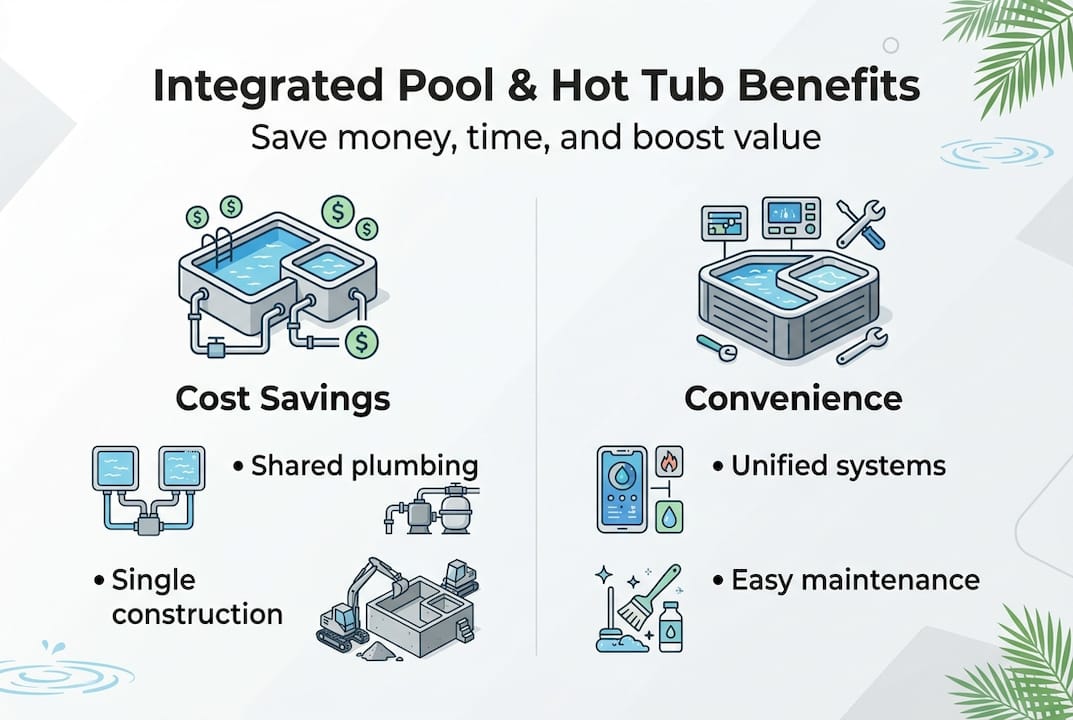
Installing both simultaneously reduces construction costs and time compared to separate projects, and shared systems lower your ongoing energy and chemical expenses. That means you are not just saving during construction. You are saving every month on heating, filtration, and water treatment because a single equipment pad handles both features together.
Here is a side-by-side look at what the cost differences typically look like:
| Cost category | Separate installations | Integrated installation |
|---|---|---|
| Labor (two mobilizations) | High | Lower (single mobilization) |
| Plumbing runs | Doubled | Shared where possible |
| Equipment (pumps, heaters) | Two separate systems | One shared system |
| Ongoing chemical costs | Two water volumes to treat | Balanced across shared system |
| Landscaping/restoration | Done twice | Done once |
| Total disruption timeline | Weeks apart or years apart | Completed together |
The savings compound over time. A shared heater, for example, maintains temperature across both features more efficiently than two independent units running separate cycles. Homeowners who upgrade their pool home value through an integrated project also tend to see a cleaner, more finished backyard aesthetic, which matters for resale.
Pro Tip: Before any digging starts, map out your electrical and gas utility lines and discuss with your builder where the equipment pad will sit. Positioning it correctly from day one means your plumbing runs stay short, your energy use stays low, and future service calls are simple.
Here are the top convenience benefits homeowners gain from going integrated from the start:
- Single equipment pad for pumps, heaters, and filtration means one service point and one maintenance schedule.
- Unified water chemistry reduces the guesswork of balancing two separate bodies of water with different temperatures and volumes.
- Fewer contractors involved means fewer scheduling gaps, cleaner communication, and a faster project completion.
- One permit process covers both features in most Indiana municipalities rather than filing separately at different times.
- Cleaner backyard layout without a portable tub cord running across the deck or a separate cover to wrestle with every day.
- Shared warranties and service agreements through a single builder relationship simplify long-term support.
For families in the Indianapolis area who want minimal disruption during construction and maximum return from their investment, integration is not a luxury add-on. It is the more practical choice.
Wellness benefits: Harnessing hot tub and pool combos
Beyond financial and convenience benefits, integration amplifies your home’s wellness potential.
A pool is excellent for cardiovascular fitness, low-impact exercise, and active play. A hot tub does something different. It targets recovery, stress relief, and circulation in ways that a pool simply cannot replicate. When you have both in the same space, you create a full wellness system right in your backyard.
Hot tubs provide health benefits including muscle relaxation, stress reduction, and improved circulation. Research from the University of Oregon shows that hot water immersion produces cardiovascular and immune responses comparable to those of regular sauna sessions.
“Regular hot water immersion produces improvements in cardiovascular function, body composition, and inflammation markers, offering therapeutic benefits that rival those of moderate aerobic exercise.” — University of Oregon research on hot water immersion and cardiovascular health
That finding matters for Central Indiana residents who face cold winters and spend months unable to use an outdoor pool. A heated hot tub extends your outdoor wellness routine through October, November, and well into the first stretch of the new year. You can maintain your recovery rituals even when the pool surface is covered.
Here are the most significant health benefits you gain from combining both features:
- Muscle relaxation and recovery. Hot water and jet therapy reduce soreness after exercise, making the hot tub a natural follow-up to pool laps or an active day outdoors.
- Improved circulation. Heat causes blood vessels to dilate, which increases blood flow throughout the body and supports cardiovascular health over time.
- Stress and anxiety reduction. The combination of warm water, buoyancy, and quiet creates a measurable reduction in cortisol levels, the body’s primary stress hormone.
- Joint relief. Warm water reduces pressure on joints, which is particularly valuable for older family members or anyone managing arthritis or chronic pain.
- Better sleep quality. Soaking in a hot tub in the evening lowers core body temperature as you exit, which signals the body to prepare for sleep.
- Year-round outdoor use. A heated hot tub keeps your backyard relevant and usable in every season, not just during Indiana’s warmer months from late May through early September.
Learn more about adding a hot tub to an existing pool setup, or explore the broader pool health benefits that extend well beyond recreation. Families who use both features together also report stronger social use of the backyard, with the hot tub naturally becoming a gathering point for conversations that the open pool surface does not encourage as easily.
If you are exploring specific products, browse the full range of spa and hot tub options designed for integration with custom pool projects in Central Indiana. The pool health advantages of regular swimming, paired with hot tub recovery sessions, create a genuinely complete home wellness environment.
Boosting home value and appeal in Central Indiana
With wellness and convenience covered, let’s explore the tangible impact on your home’s value.
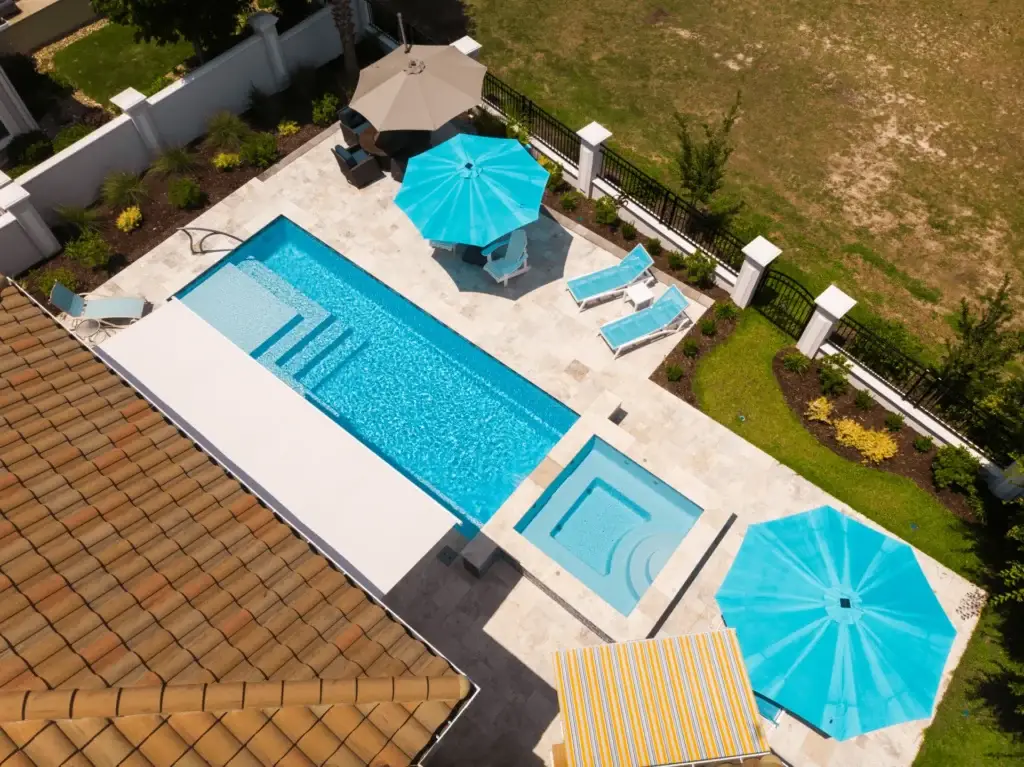
Real estate professionals increasingly recognize that integrated outdoor features carry more weight with buyers than standalone additions. A portable hot tub sitting on a concrete pad does not read as a luxury feature during a home showing. A built-in spillover spa seamlessly connected to a tiled inground pool absolutely does. That visual and functional difference translates directly into buyer interest and sale price.
Inground pool and hot tub combos boost home value and buyer appeal, especially as luxury features. Nationally, pools carry a return on investment of approximately 7%, though some market reports place that figure as high as 56% in regions where outdoor living is especially prized. In Indiana specifically, inground pools add roughly 7% to home value, and a hot tub remodel typically costs between $5,000 and $25,000 with a strong ROI when the feature is built in rather than portable.
| Feature added | Estimated cost range | Approximate value added | Notes |
|---|---|---|---|
| Inground pool only | $50,000 to $100,000+ | ~7% of home value | Varies by neighborhood and pool size |
| Portable hot tub | $3,000 to $12,000 | Minimal to none | Buyers may remove it; not seen as permanent |
| Built-in spa or hot tub | $5,000 to $25,000 add-on | High ROI in luxury market | Most impact when integrated with pool |
| Integrated pool and spa combo | $60,000 to $130,000+ | Strongest combined ROI | Appeals to luxury buyers in Indiana market |
Indiana’s climate makes year-round outdoor features more valuable than many homeowners initially expect. Buyers in the Central Indiana market, particularly in communities like Carmel, Fishers, Westfield, and Zionsville, are actively looking for properties that feel resort-like and functional across multiple seasons. An integrated pool and spa system signals exactly that. It also signals that the home was built with intention and care rather than pieced together over time.
For homeowners focused on long-term investment, the data reinforces what experienced builders already know: integrated projects produce better financial outcomes and stronger curb appeal than additions made separately. Explore how a pool adds to pool value in Indiana and what buyers in the local market respond to most.
Installation methods and material choices for combos
Ready to make it happen? Here is how installation methods and materials shape your options.
There are two primary ways to create hot tub and pool combos, and the right choice depends on your yard layout, your budget, and the pool material you select. Understanding the difference before your design consultation saves time and sets realistic expectations.
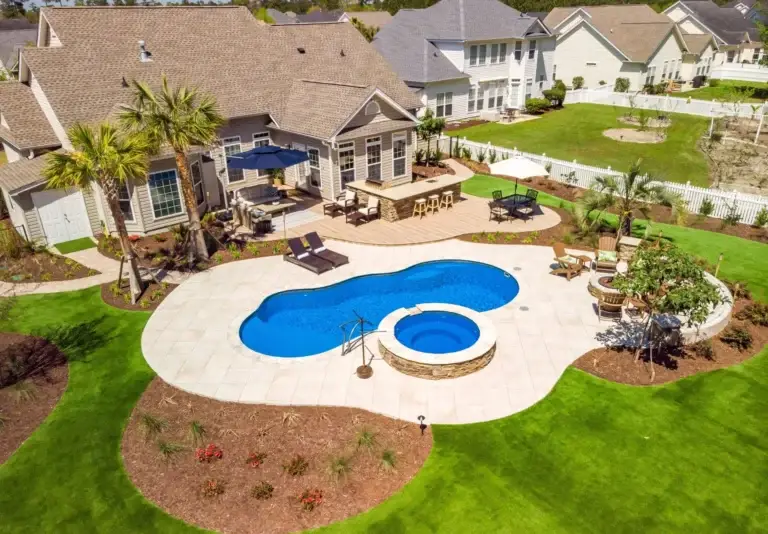
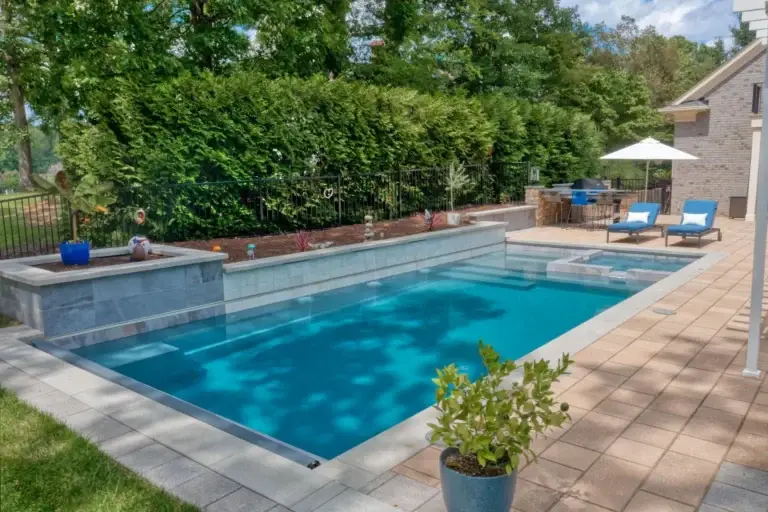
Spillover hot tubs are the most visually dramatic option. The hot tub sits elevated above the pool, and warm water cascades over the edge and into the pool below. The two features share plumbing and filtration equipment, which simplifies ongoing maintenance. The visual effect is striking and tends to photograph well, which supports resale value. Spillover systems use shared plumbing where the raised hot tub overflows into the pool, creating a seamless water feature that is easier to manage than two separate systems.
Adjacent installations place the hot tub at pool deck level, connected by shared equipment but physically separated. This approach is often easier to retrofit into an existing pool design and works well when the yard layout does not accommodate an elevated structure.
Material choices shape the durability, cost, and flexibility of your project:
- Concrete or gunite pools offer the most flexibility for built-in spa integration. The entire structure is formed on-site, meaning the hot tub can be shaped and sized to match any design vision. This is the best choice for spillover spas with complex tile work or raised walls.
- Fiberglass pools arrive as prefabricated shells, which limits the shape and size options but speeds up installation significantly. Some fiberglass models include integrated spa areas molded into the design. Learn more about the fiberglass construction process and how it compares in terms of timeline and surface durability.
- Vinyl liner pools can accommodate adjacent hot tub additions but typically do not support true spillover spa integration because the liner material and structural frame limit customization. Review the full pool material comparisons to understand which option fits your goals.
For Indiana’s climate, concrete and gunite integrations hold up well across freeze-thaw cycles when built correctly with proper bonding and drainage. Fiberglass shells resist algae growth and require fewer chemicals year-round, which is a practical advantage during the swimming season.
Pro Tip: When selecting your material, ask your builder to future-proof the plumbing by installing access ports near the equipment pad. This makes it far easier to service jets, adjust water flow, and troubleshoot heating issues without major excavation later.
Browse real project examples to get a feel for how different materials and configurations look in finished backyards. Seeing a completed project showcase can help you visualize what is possible on your own property. You can also read practical hot tub enjoyment tips to understand how daily use patterns should influence your design choices before you finalize the layout.
What most homeowners miss about hot tub and pool combos
Here is the part most articles skip over. Homeowners frequently ask whether a combo is “worth it,” and the honest answer is that it depends almost entirely on how you intend to use it daily, not just for parties or special occasions.
A portable hot tub is actually a better fit for someone who wants a solo therapeutic soak at 10 p.m. without interacting with the rest of the backyard setup. It is simpler to manage and cheaper upfront. But an integrated system wins decisively when your goals include entertaining, adding lasting property value, or creating a backyard that the whole family uses together in multiple ways across the year.
Combos work best for entertainment and family use, while portable hot tubs suit daily therapy routines better. Pools and hot tubs add more value in warm climates, but Indiana’s luxury market increasingly favors modern multi-feature installations.
That second point deserves emphasis. Central Indiana buyers are not comparing your backyard to a beachfront property. They are comparing it to other homes in Carmel, Noblesville, and Greenwood. In that local context, a well-designed integrated pool and spa is a clear differentiator. Buyers who prioritize lifestyle features see it as a finished, intentional space rather than a house with a pool and a tub sitting next to each other.
If you are thinking about resale even five to ten years from now, an integrated design built with quality materials is the more strategic move. The upfront investment is higher, but the long-term payoff in lifestyle enjoyment and buyer appeal justifies it for most Central Indiana families.
Ready to transform your backyard?
If this article has clarified what is possible with an integrated pool and hot tub project, the next step is seeing those options in a real design consultation.
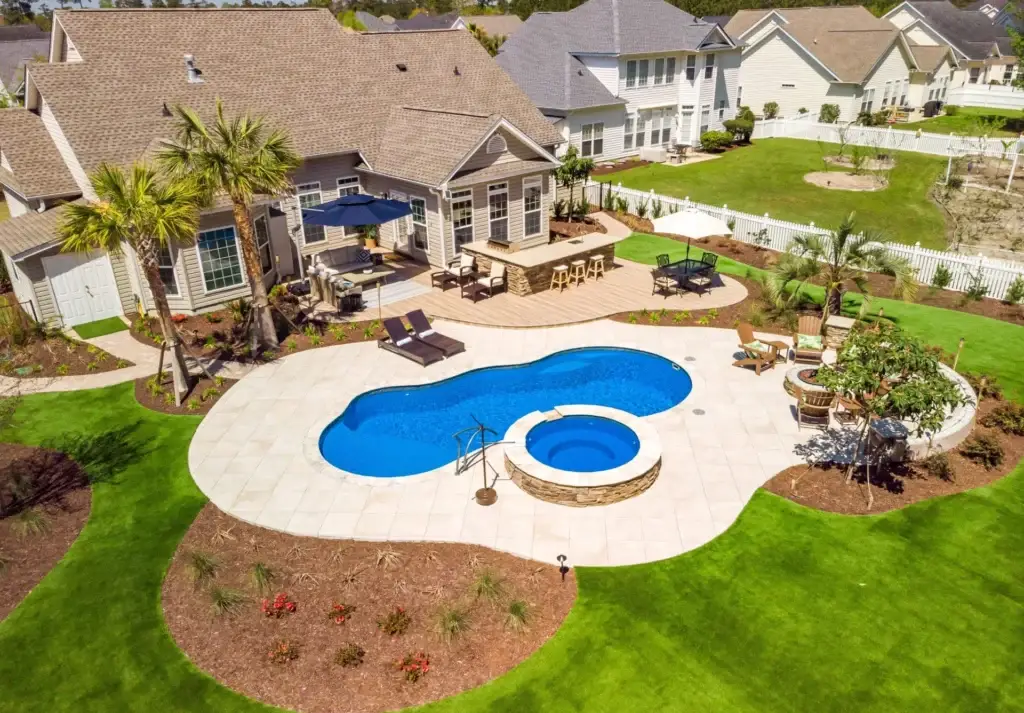
At Pools of Fun, we have been building custom pools and outdoor living spaces in Central Indiana since 1981. We know the local market, the climate challenges, and what buyers respond to. Explore our full range of spa and hot tub options, or take a look at a finished pool and hot tub project to see what integrated design looks like in practice. When you are ready to start planning, our outdoor living inspiration gallery gives you a full picture of what your backyard can become. Contact us for a free consultation and let’s build something worth coming home to.
Frequently asked questions
What are the main advantages of installing hot tubs with pools?
Installing both together saves on construction costs, boosts home value, and combines wellness features for year-round enjoyment in a single, cohesive backyard space.
How does a spillover hot tub work with a pool?
A spillover hot tub sits elevated above the pool and uses shared plumbing systems, allowing warm water to flow from the tub into the pool while simplifying both maintenance and heating across both features.
Does adding a hot tub and pool increase property value in Indiana?
Yes. Inground pools add roughly 7% to home value in Indiana, and luxury integrated combos appeal strongly to buyers in Central Indiana communities like Carmel, Fishers, and Westfield.
Are there wellness benefits to having both a pool and hot tub?
Hot water immersion improves circulation and relaxes muscles while reducing stress, offering therapeutic benefits that complement the cardiovascular advantages of regular pool swimming throughout the year.