TL;DR:
- Indiana pool planning requires special attention to clay soil, safety codes, and permit requirements.
- Smart technology and efficient heaters can extend the swimming season and reduce maintenance.
- Geometric pools are easier to winterize and better suited for smaller or formal yards.
Planning a pool upgrade in Central Indiana means navigating a unique set of challenges that homeowners in warmer climates simply don’t face. Indiana’s clay soil and short swim season directly influence which features deliver real value and which ones become expensive regrets. From smart automation systems to safety compliance and design choices that hold up through harsh winters, the decisions you make now shape how much enjoyment your family gets for decades. This guide walks you through the most impactful pool features for 2026, ranked by what actually matters for Central Indiana backyards.
Table of Contents
- Setting the standard: Indiana pool feature selection criteria
- Smart tech integrations: Pool controls and efficiency for 2026
- Design trends: Geometric vs. naturalistic pools for Indiana families
- Outdoor living add-ons: Kitchens, patios, and water features
- Our perspective: What Indiana homeowners miss when upgrading pools
- Ready to create your ideal pool? Explore Indiana’s best upgrades
- Frequently asked questions
Key Takeaways
| Point | Details |
|---|---|
| Indiana-specific features | Choosing pool features tailored to Indiana’s climate and clay soil delivers lasting value and easier maintenance. |
| Smart tech saves money | App controls and energy-efficient pumps lower bills and simplify maintenance for busy families. |
| Design impacts usability | Geometric pools are easier to winterize while naturalistic pools offer play features for kids. |
| Outdoor upgrades matter | Patios, kitchens, and water features make backyard pools more enjoyable and increase property value. |
| Safety and permits first | Indiana pools require early permit planning and must comply with new safety cover and fencing requirements for 2026. |
Setting the standard: Indiana pool feature selection criteria
Before you start browsing pool catalogs or watching design videos, it helps to understand what makes Indiana pool planning different. The conditions here are specific, and the features that work well in Arizona or Florida may not serve you the same way in Indianapolis.
Here are the key factors every Central Indiana homeowner should evaluate:
- Clay soil movement: Indiana’s clay-heavy ground expands and contracts with moisture and temperature changes. This puts stress on pool walls and plumbing if the wrong materials are used. Clay soil and permit requirements are two of the most overlooked factors in local pool planning.
- Permit and HOA requirements: Most Central Indiana municipalities require permits before excavation begins. Some HOAs add their own rules around fencing, equipment placement, and pool size. Getting ahead of this paperwork early prevents costly construction delays.
- Safety fencing and auto covers: Indiana code requires physical barriers around residential pools. Safety fencing and automatic pool covers are not optional add-ons. They are baseline requirements that protect your family and satisfy local inspectors.
- Heat-retaining finishes: Darker interior finishes absorb more solar energy, which helps warm the water naturally. This is a simple, low-cost feature that extends your usable swim season without adding to your energy bill.
- Efficient heating systems: A quality heat pump or gas heater makes a real difference when you want to swim in May or September. Indiana’s swim season runs roughly 14 to 16 weeks without assistance, but the right heating system can push that closer to 20 weeks.
- Low-maintenance features: Cartridge filters, saltwater systems, and robotic cleaners reduce the weekly time you spend on upkeep. For busy families, this matters as much as the design itself.
Pro Tip: Before finalizing any feature list, review our Indiana pool checklist to make sure you haven’t missed a regional requirement that could delay your project.
Your pool planning guide Indiana is also a strong starting point for understanding timelines, budgets, and contractor questions before the first shovel hits the ground. Getting these fundamentals right sets the stage for every feature decision that follows.
Smart tech integrations: Pool controls and efficiency for 2026
Once you know the criteria, technology upgrades are the next game-changer. Smart pool systems have moved from luxury status to practical necessity, especially for homeowners who want to maximize a short Indiana swim season without spending every weekend on maintenance.
Here’s how the most valuable smart features stack up for 2026:
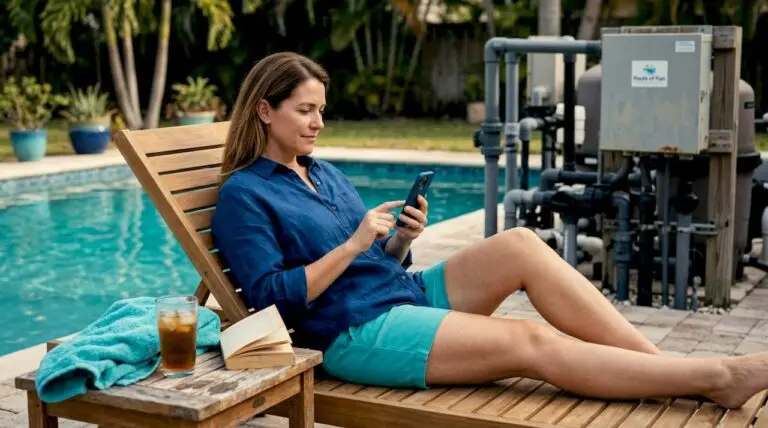
- App-controlled automation: Modern pool control systems let you adjust temperature, lighting, and filtration from your phone. You can heat the pool before you arrive home from work, which is especially useful during Indiana’s cooler spring and fall months.
- Variable speed pumps: These are one of the highest-return investments in pool technology. Variable speed flow pumps like Nautis VSF save energy using real-time flow control, adjusting output based on actual demand rather than running at full power constantly.
- AI-assisted water monitoring: Smart sensors now track pH, chlorine, and temperature around the clock. They alert you when levels drift out of range, so you catch problems early instead of arriving at a green pool on a Saturday morning.
- Predictive maintenance alerts: Some systems now flag equipment wear before it becomes a failure. A pump bearing starting to degrade, a heater running less efficiently, a filter approaching its service limit. These alerts save you from emergency repair costs during peak season.
- LED lighting controls: Smart lighting lets you program color sequences, dimming schedules, and party modes from an app. It also uses significantly less energy than older halogen pool lights.
| Feature | Energy savings | Convenience level | Best for Indiana? |
|---|---|---|---|
| Variable speed pump | High | Medium | Yes |
| App-controlled heating | Medium | High | Yes |
| AI water monitoring | Low | High | Yes |
| Smart LED lighting | Medium | High | Yes |
| Automated chemical dosing | Low | High | Yes |
Pro Tip: Pair your smart system with energy-efficient pool heaters to get the most out of Indiana’s limited warm months. The combination of smart controls and an efficient heater can extend your season by four to six weeks without dramatically increasing operating costs. Staying current with 2026 pool trends helps you prioritize which tech features deliver real value versus novelty.
Design trends: Geometric vs. naturalistic pools for Indiana families
With tech enhancements covered, design choices form the foundation of your backyard pool vision. The two dominant styles you’ll encounter are geometric pools and naturalistic pools, and each has real trade-offs for Indiana homeowners.
| Design style | Winterization | Excavation needs | Best fit |
|---|---|---|---|
| Geometric | Easier | Standard | Formal yards, smaller lots |
| Naturalistic | More complex | Extensive | Large yards, family-focused |
Geometric pools are easier to winterize and suit formal landscapes, while naturalistic designs with sun shelves are ideal for families and kids but require more excavation. That excavation factor is significant in Indiana because clay soil removal adds both cost and time to naturalistic builds.
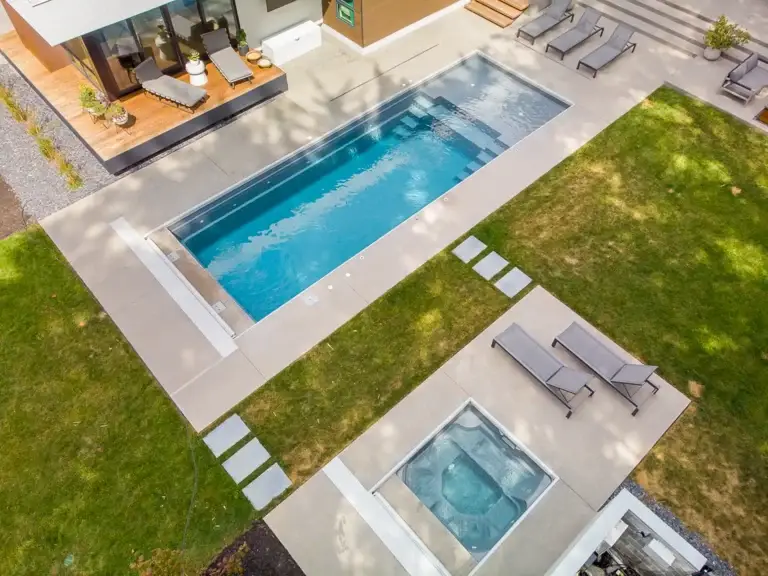
Geometric pools offer clean lines, rectangular or L-shaped footprints, and straightforward winterization. They work well on smaller lots and pair naturally with structured patio designs. For homeowners who want a pool that’s easy to close each fall and open each spring, geometric is often the smarter choice.
Naturalistic pools mimic the look of a lagoon or pond, with curved edges, rock features, and integrated landscaping. They create a resort-like atmosphere and are especially popular for families with young children who enjoy shallow play zones and sun shelves.
Key features to consider for each style:
- Sun shelves (also called tanning ledges): Shallow platforms where kids can splash safely or adults can lounge in a few inches of water. These work in both styles but look most natural in organic-shaped pools.
- Play zones: Shallow areas with water jets or spray features that keep younger children engaged without deep water concerns.
- Integrated spa: A connected hot tub that shares the pool’s heating and filtration system, reducing equipment costs.
“The right pool shape isn’t just about looks. It’s about how your yard drains, how your soil moves, and how much time you want to spend on seasonal maintenance.”
For most Central Indiana families, we recommend reviewing best inground pools options alongside your lot size and soil report before committing to a shape. Pairing your design with family-friendly pool landscaping also helps tie the whole backyard together without adding high-maintenance plant selections.
Outdoor living add-ons: Kitchens, patios, and water features
Once you’ve selected the main pool design, outdoor add-ons create a truly personalized living space. A pool alone is a great feature. A pool surrounded by a well-designed patio, an outdoor kitchen, and a few well-placed water features becomes the centerpiece of your family’s summer life.
Patios are the most practical starting point. A well-built patio creates the transition zone between your home and the water, and the material you choose matters in Indiana. Concrete pavers and natural stone both handle freeze-thaw cycles better than poured concrete slabs, which can crack as the ground shifts. Efficient heating and dark finishes extend Indiana’s pool use, and flexible materials are equally vital for clay soils when building surrounding hardscape.
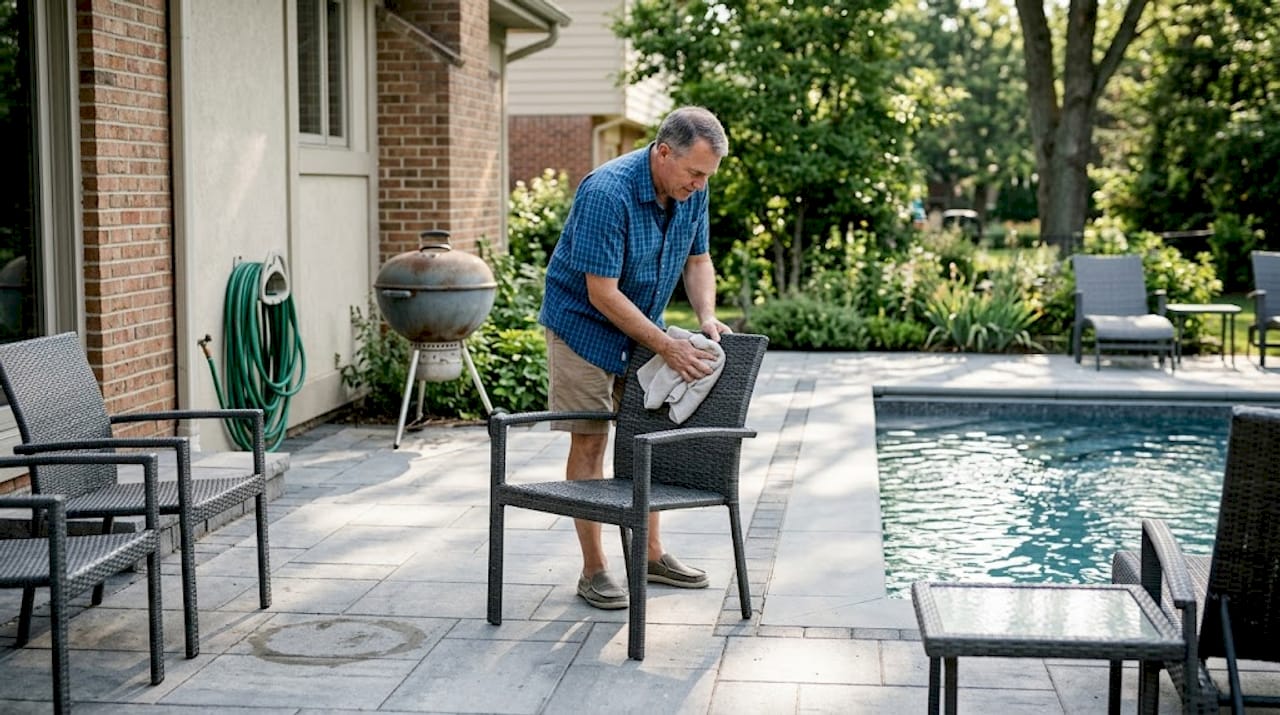
The value of patio essentials goes beyond aesthetics. A properly graded patio also directs water away from your pool equipment and foundation, which reduces long-term maintenance headaches.
Outdoor kitchens have become one of the fastest-growing add-ons for pool projects across Central Indiana. Families who invest in outdoor kitchens report spending significantly more time outside during the swim season, simply because meals don’t require going back indoors. A basic setup includes a built-in grill, counter space, and a small refrigerator. More complete builds add pizza ovens, wet bars, and covered pergolas.
Water features serve double duty. For kids, a deck jet or splash pad zone adds interactive play value. For adults, a waterfall or fountain creates ambient sound that makes the backyard feel more relaxing. Pool fountains also help aerate the water, which supports chemical balance and reduces algae growth.
Top add-ons ranked by family impact:
- Covered patio or pergola for shade during peak afternoon heat
- Built-in outdoor kitchen with grill and counter space
- Deck jets or splash features for younger children
- Fire pit or fire table for evening use into fall
- Landscape lighting for safety and ambiance after dark
These additions don’t just improve enjoyment. They also add measurable resale value to your home, making the investment work in more than one direction.
Our perspective: What Indiana homeowners miss when upgrading pools
After more than four decades building pools across Central Indiana, we’ve seen the same oversights come up repeatedly. Homeowners focus on the exciting parts, the tile selection, the water features, the kitchen setup, and underestimate the foundational decisions that determine long-term satisfaction.
The biggest missed step is permit and safety planning. Auto covers and safety features will be mandatory for Indiana pools in 2026, and homeowners who treat these as afterthoughts end up scrambling to retrofit barriers that should have been part of the original design. Pool safety barriers are not just a compliance checkbox. They’re the feature that lets you actually relax while your kids are near the water.
Smart technology also matters more for short seasons than most people realize. When you only have 16 to 20 weeks of swimming weather, every week of downtime from an equipment failure or chemistry problem is a significant percentage of your season. Investing in monitoring and automation upfront pays back quickly in Indiana’s climate.
Finally, the homeowners who are happiest long-term are the ones who chose features based on their actual lifestyle, not what looked best in a showroom. Think about how your family actually uses outdoor space before adding every available upgrade.
Ready to create your ideal pool? Explore Indiana’s best upgrades
You now have a clear picture of what separates a good pool project from a great one in Central Indiana. The next step is seeing these ideas brought to life in real backyards.
Browse the Hough pool example in our portfolio to see how a complete backyard transformation comes together, from pool design through poolside kitchen upgrades and outdoor living features. Pools of Fun has been building custom pools across Indianapolis since 1981, and our team is ready to help you plan every detail of your 2026 project. Visit Indiana pool experts to schedule your free consultation and start designing the backyard your family deserves.
Frequently asked questions
What pool features are most popular for Indiana families in 2026?
Smart tech integrations and safety covers are among the top trends this year, alongside geometric shapes and outdoor kitchens that extend backyard use beyond swim time.
Do Indiana pools need special materials because of local soil?
Yes. Clay soil requires flexible materials in both pool construction and surrounding hardscape to prevent cracking or shifting as the ground moves with moisture and temperature changes.
Are heating systems and dark finishes worth it for Indiana’s short pool season?
Efficient heating and dark finishes are strongly recommended because they extend the usable swim season by several weeks and reduce the per-week cost of operating your pool.
What are the permit and safety requirements for Indiana pools in 2026?
Safety fencing and auto covers are mandatory for new pool installations, and early permit planning is strongly advised to avoid construction delays once your project begins.
Which pool design is easier to maintain through central Indiana winters?
Geometric pools are easier to winterize and require less seasonal labor compared to naturalistic designs, making them a practical choice for homeowners who want a simpler close-down process each fall.
Recommended
- Discover the hottest pool design trends for 2026
- Why Inground Pools Are the Top Choice for Indiana Backyards – Pools of Fun
- The ultimate backyard pool checklist for Indiana homeowners
- Who are the best pool builders in Indiana – Pools of Fun Owner Community
- Lawn care in Christie Park: upgrade your outdoor space