TL;DR:
- Proper pool placement influences usability, safety, drainage, privacy, and home value.
- Careful site selection prevents costly mistakes and enhances backyard enjoyment.
- Consulting experienced professionals ensures optimal location considering local climate and regulations.
Choosing where to place your pool might be the most consequential decision you make in the entire project, yet most Central Indiana homeowners spend far more time picking tile colors or deciding between a waterfall and a slide. The result? Pools that sit in the wrong corner of the yard, catch too much shade, feel disconnected from the house, or create drainage headaches every time it rains. Getting the location right from the start shapes everything, from how often your family actually uses the pool to how much your home is worth when it’s time to sell.
Table of Contents
- Why pool site selection matters more than homeowners think
- Core factors that influence the best pool location
- Common pitfalls and mistakes in pool placement
- How smart site selection enhances backyard enjoyment and home value
- Our take: site selection is your single most important pool decision
- Bring your dream pool to life with expert guidance
- Frequently asked questions
Key Takeaways
| Point | Details |
|---|---|
| Site selection is crucial | Where you place your pool will determine how much you use and enjoy your backyard. |
| Consider all factors | Sun, safety, privacy, access, and regulations should shape your site decision. |
| Small mistakes cost big | Fixing a poorly sited pool is expensive and disruptive, so careful planning matters now. |
| Professional advice pays off | Pool specialists can foresee and solve issues homeowners often miss. |
Why pool site selection matters more than homeowners think
When you start planning a custom in-ground pool, it’s natural to get excited about the fun stuff: pool shapes, water features, lighting, and finish options. But key site selection factors deserve just as much attention as any of those choices, because location affects every single one of them.
Many pool owners in Indiana cite site selection as the single most important factor in their long-term satisfaction and backyard usability. That’s a strong statement, and it reflects real experience. A pool placed in a shady corner may look beautiful in photos but feel cold and uninviting by mid-afternoon. A pool positioned too close to the property line may require expensive retaining walls or create tension with neighbors. A pool that doesn’t account for the natural flow of water across your yard can turn into a mud problem every spring.
“The pool itself is only as good as where you put it. We’ve seen families invest significantly in beautiful custom pools, only to find they rarely use them because the location doesn’t work with how they actually live in their yard.”
Before you start reviewing questions before building a pool, take time to walk your backyard at different times of day. Notice where the sun hits in the morning versus late afternoon. Watch where water pools after a heavy Indiana rainstorm. Identify the views you love and the ones you’d rather block. These observations will guide every placement decision that follows.
Pro Tip: Spend at least one full weekend observing your backyard at different hours before committing to a pool location. Note sun angles in the morning, midday, and evening, and pay attention to where wind consistently comes from. Central Indiana’s weather patterns, including strong south and southwest winds in summer, can significantly affect how comfortable your pool area feels.
Here’s a quick look at what’s actually at stake with site selection:
- Sun exposure: A pool that gets 6 or more hours of direct sunlight daily stays warmer naturally, reducing heating costs and extending your swim season.
- Safety: Placement relative to the house affects how easily adults can supervise children from inside or on a patio.
- Drainage: Poor drainage around the pool leads to erosion, water intrusion, and long-term structural issues.
- Privacy: Thoughtful placement, combined with landscaping, can create a secluded retreat rather than a fishbowl.
- Access: Consider how guests, equipment, and maintenance crews will reach the pool area.
- Future use: Leave room for a patio, outdoor kitchen, or play area to grow alongside your family’s needs.
With the stakes clear, it’s important to unpack what truly influences an ideal pool location.
Core factors that influence the best pool location
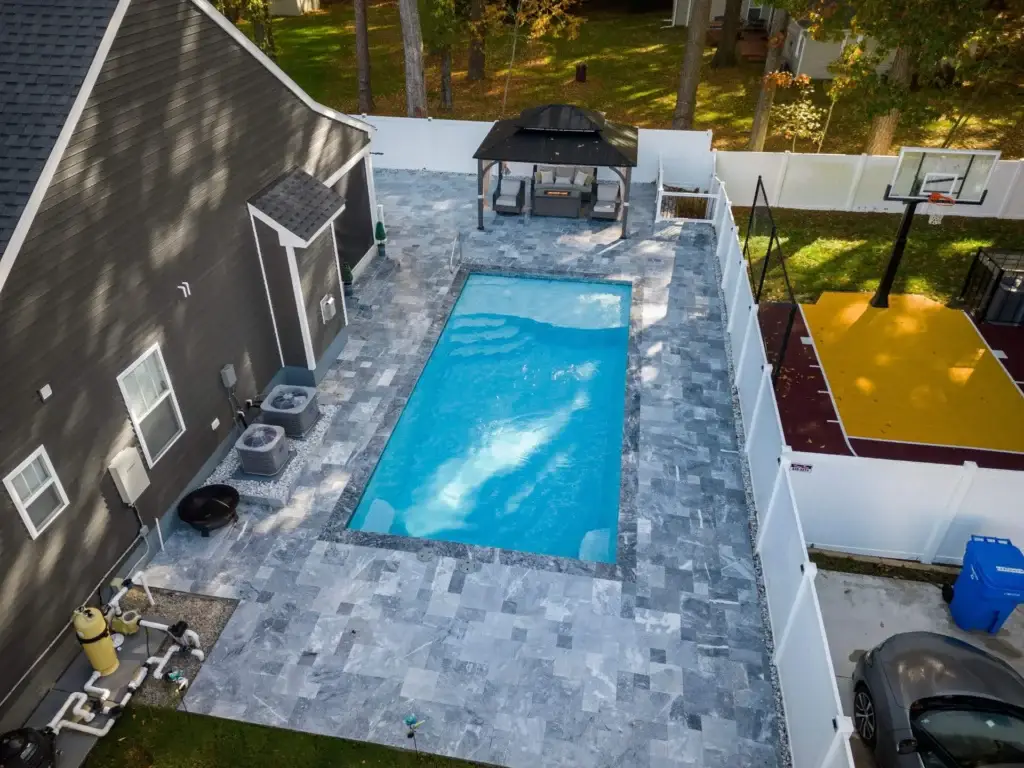
A comprehensive list of critical factors determines whether a pool site is optimal for long-term enjoyment and ease of use. When you’re evaluating your property, work through these seven criteria carefully before finalizing any design.
- Sun exposure: South and west-facing pool areas receive the most sun throughout the day in Central Indiana. Maximizing direct sunlight keeps the water comfortable, reduces reliance on pool heaters, and makes the space more inviting for longer stretches of the season.
- Privacy: Consider the sightlines from neighboring properties, streets, and second-story windows. Strategic placement combined with fencing or plantings can create a genuinely private retreat.
- Safety and supervision: Placing the pool within a clear line of sight from your kitchen, living room, or main patio means adults can monitor swimmers easily without being poolside at all times.
- Access and circulation: You need clear pathways for swimmers, guests, maintenance equipment, and emergency access. A pool tucked into a corner with a single narrow path creates daily frustration.
- Views and aesthetics: Think about what you’ll see from inside the house and from your primary outdoor seating areas. A pool that frames a garden view or creates a focal point from the kitchen window adds daily visual value.
- Zoning and setback requirements: Site selection should always account for safety, accessibility, and municipal regulations. Most Indiana municipalities require pools to sit a specific distance from property lines, utility easements, and structures. Ignoring setbacks can halt construction entirely.
- Drainage and grading: Water should flow away from the pool, not toward it. Your yard’s natural grade (slope) and soil type directly affect how well the pool area drains and how stable the surrounding ground remains over time.
Here’s a comparison to illustrate how site choices affect three key outcomes:
| Site choice | Sunlight | Privacy | Safety |
|---|---|---|---|
| Center of yard, south-facing | Excellent (full day) | Moderate (open on all sides) | Good (visible from house) |
| Back corner, shaded by trees | Poor (limited afternoon sun) | High (natural screening) | Poor (harder to supervise) |
| Adjacent to house, west-facing | Good (strong afternoon sun) | Low (close to neighbors) | Excellent (direct line of sight) |
| Mid-yard with privacy fence | Good (if south-facing) | High (fenced perimeter) | Good (visible from patio) |
The best placement often balances several of these factors rather than maximizing any single one. Working with an experienced designer who understands why build with experts matters becomes clear when you see how much local knowledge influences these trade-offs.
Pro Tip: Don’t plan your pool in isolation. Think about where you want a patio, an outdoor kitchen, or a play area for younger kids. Leave enough space for those elements now, even if you’re not building them right away. A pool that fills the entire backyard leaves no room to grow.
Now that you know what factors to consider, how do you weigh real-world pros and cons for your property?
Common pitfalls and mistakes in pool placement
Even well-intentioned homeowners make placement mistakes that cost them time, money, and enjoyment. Improper pool siting can lead to extra construction costs, safety issues, and awkward backyard use for years. Knowing the most common errors helps you sidestep them entirely.
“We had a client who placed their pool beautifully in terms of aesthetics, but they didn’t account for the slope of their yard. Every time it rained, runoff collected along one side of the pool. They ended up spending nearly as much on corrective drainage work as they had on the original pool surround.”
That kind of outcome is avoidable with proper planning. Here are the most frequent mistakes Central Indiana homeowners make, along with practical ways to prevent each one:
- Ignoring property lines and setbacks. Assuming you know where your property ends is a costly gamble. Always get a survey before finalizing placement. Most municipalities require pools to sit at least 5 to 10 feet from property lines, and some neighborhoods have additional HOA restrictions. Violating these rules can mean tearing out completed work.
- Underestimating the space needed beyond the pool edge. The pool itself is only part of the footprint. Coping (the material that borders the pool edge), a surrounding patio, safety fencing, and equipment pads all require additional square footage. A pool that looks proportional on a design sketch may feel cramped once the full surround is installed.
- Poor drainage planning. Flat or inward-sloping yards funnel water toward the pool area, creating erosion, flooding, and potential damage to the pool shell over time. Before excavation begins, a drainage evaluation should be part of every site assessment.
- Placing the pool under or near large trees. Trees provide shade, but they also drop leaves, seeds, and debris constantly. Roots can interfere with underground plumbing and the pool shell itself. If trees are a factor on your property, a professional can help you weigh the trade-offs.
- Overlooking utility lines. Underground gas, electric, water, and sewer lines are not always where homeowners expect them. A utility locate (often called “Call 811” in Indiana) is required before any excavation, but the results should also inform placement decisions, not just construction safety.
Using a step-by-step pool guide during your planning phase helps you address each of these risks systematically before a shovel hits the ground. Getting early planning for pools right means fewer surprises and a smoother build.
Avoiding the missteps above sets you up for a backyard that’s both beautiful and practical.
How smart pool site selection enhances backyard enjoyment and home value
Strategic pool placement doesn’t just prevent problems. It actively creates value, both in how much you enjoy your backyard and in what your home is worth. A well-chosen pool site creates seamless entertaining, maximizes sun exposure, and increases property value more than other upgrades.
Here’s a look at how placement quality affects real outcomes:
| Placement quality | Usability | Aesthetic impact | Estimated value impact |
|---|---|---|---|
| Optimal (sun, access, views) | High daily use | Focal point of yard | Strong positive ROI |
| Adequate (partial shade, limited access) | Moderate seasonal use | Blends into yard | Neutral to modest gain |
| Poor (shaded, drainage issues, cramped) | Low use, maintenance burden | Visual clutter | Potential negative impact |
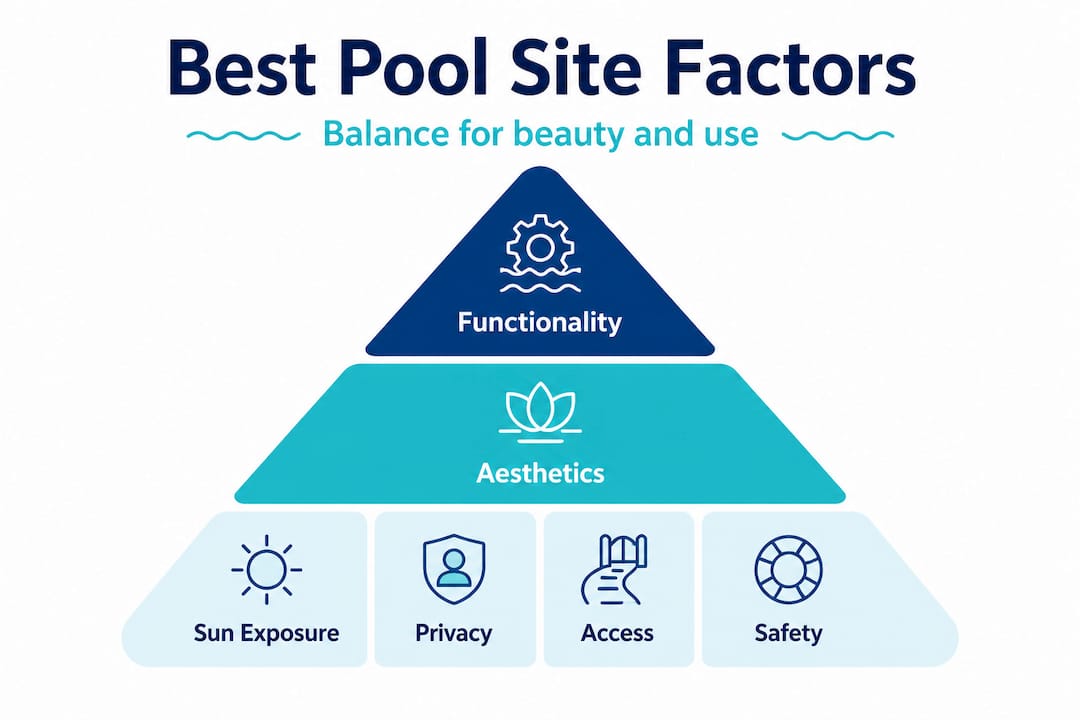
The numbers reinforce what experienced pool builders see in practice. A pool that’s well-sited and paired with thoughtful pool landscaping inspiration can return a meaningful portion of its investment when a home sells, while a poorly placed pool may actually deter buyers who see it as a maintenance liability rather than an asset.
Here are the specific improvements that smart site selection delivers:
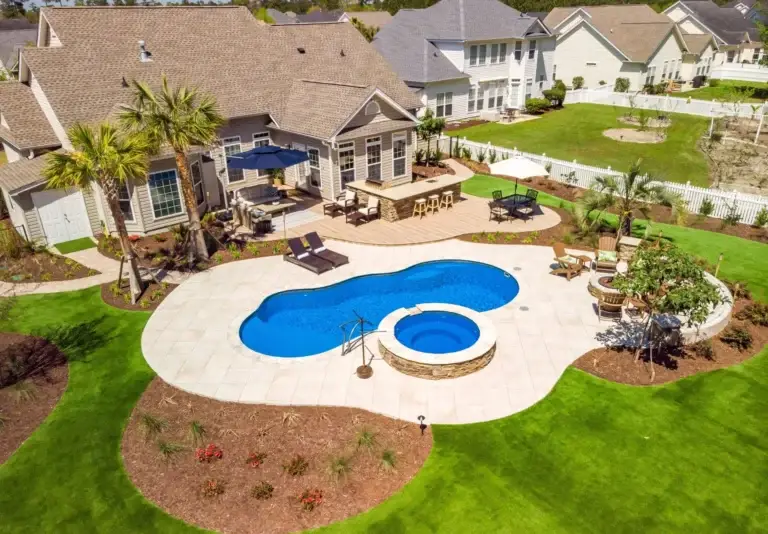
- Better sight lines and visual flow. A pool positioned to align with your home’s architecture and outdoor living areas creates a cohesive backyard that feels intentional and polished, not like an afterthought.
- Natural gathering areas. When the pool is placed in relationship to a patio or outdoor kitchen, people naturally flow between spaces. Entertaining becomes effortless rather than awkward.
- Improved safety and supervision. Placement that keeps the pool visible from primary indoor and outdoor living areas reduces supervision stress, especially for families with young children.
- Extended swim season. Maximizing sun exposure can add weeks to the comfortable swimming season in Central Indiana, where summer temperatures can shift quickly in early June and late August.
- Higher resale value. Buyers in the Indianapolis area increasingly expect outdoor living spaces to function as extensions of the home. A pool that integrates naturally with the yard, supported by poolside landscaping tips, signals quality and thoughtfulness that commands a premium.
Understanding these real gains makes it clear why thoughtful site selection is worth the effort.
Our take: pool site selection is your single most important pool decision
After more than four decades of building pools across Central Indiana, we’ve seen a consistent pattern. The homeowners who are most satisfied with their pools, years after installation, are almost always the ones who spent the most time on placement before they spent a single dollar on features.
It’s a contrarian view in an industry that often leads with the exciting stuff: infinity edges, tanning ledges, fiber optic lighting, and custom water features. Those elements are genuinely wonderful, and we love designing them. But they can’t compensate for a pool that sits in the wrong spot.
We’ve seen families install beautiful, feature-rich pools that they rarely use because the location doesn’t work with their daily life. The pool is in the far corner of the yard, away from the house, partially shaded, and disconnected from any patio or gathering space. It becomes a maintenance obligation rather than a source of joy.
Contrast that with a simpler pool, placed exactly right, that becomes the center of family life from Memorial Day through Labor Day. That pool gets used every single day because it’s warm, accessible, visible from the kitchen, and surrounded by comfortable space to gather.
The lesson we’ve learned from building thousands of pools is this: revising a poorly placed pool is far more expensive than building smart from the start. Relocating a pool after installation can cost tens of thousands of dollars and require significant landscaping repairs. Getting placement right the first time is not just the smart financial move. It’s the move that determines whether your pool becomes a beloved part of your home or a source of ongoing regret.
If you’re currently in the planning phase, we encourage you to review pool upgrade trends alongside your site selection work. Understanding where the industry is heading helps you make placement decisions that will feel current and functional for years to come.
Bring your dream pool to life with expert guidance
Pool site selection is a decision that benefits enormously from local expertise. Central Indiana’s soil conditions, seasonal weather patterns, municipal setback rules, and neighborhood HOA requirements all influence what works best on your specific property.
At Pools of Fun, we’ve been helping Central Indiana families navigate exactly these decisions since 1981. Our design team brings hands-on knowledge of local conditions to every consultation, helping you evaluate your yard’s potential and identify the placement that maximizes both function and beauty. You can see finished pool projects from across the region to get a sense of how thoughtful placement transforms real backyards. When you’re ready to talk through your options, our team is here to walk you through every consideration, from sun angles to setback requirements. Learn more about why choose Pools of Fun and explore our full range of outdoor living solutions to see how we can bring your complete backyard vision to life.
Frequently asked questions
What is the most important factor in pool site selection?
Sun exposure, safety, and convenient access are the three most important criteria for most Central Indiana backyards. Site selection should always account for safety, accessibility, and municipal regulations as baseline requirements before any other considerations.
How does my local climate affect pool site selection?
Central Indiana’s variable weather makes sun and wind exposure key for comfort and energy efficiency throughout the season. Pool owners in Indiana consistently identify site selection as the top factor in long-term satisfaction, largely because local climate conditions amplify the impact of placement decisions.
Can poor site selection lower my home value?
Yes, a poorly placed pool can reduce backyard usability and even decrease property value by making the yard feel cluttered or difficult to maintain. A well-chosen pool site creates seamless entertaining and increases property value more reliably than most other upgrades.
What mistakes do homeowners most often make with pool placement?
The most common errors are underestimating required space, ignoring drainage, and not checking property lines before finalizing a location. Improper pool siting can lead to extra construction costs, safety issues, and awkward backyard use for years after the project is complete.
Should I consult a professional before pool site selection?
Yes, professionals can identify factors or pitfalls you may miss and help ensure your project meets all necessary codes and regulations. A comprehensive list of critical factors determines whether a pool site is truly optimal, and an experienced builder can evaluate all of them in the context of your specific property.