TL;DR:
- Native plants and durable hardscaping are key to low-maintenance, resilient Indiana pool landscapes.
- Proper layout, drainage, and regional materials prevent costly repairs and enhance safety.
- Focus on evergreen, native plants, slip-resistant surfaces, and functional design for long-lasting beauty.
Designing a poolside landscape that looks great, holds up to Indiana weather, and doesn’t consume every weekend is genuinely challenging. Central Indiana families deal with heavy clay soil, hard freeze-thaw winters, and the reality of kids and pets making daily use of every square foot. The good news is that the right combination of native plants, durable hardscaping, and smart layout can give you a backyard that’s both beautiful and easy to manage. This guide walks you through practical choices, real plant recommendations, material comparisons, and design ideas built specifically for Central Indiana backyards.
Table of Contents
- How to choose low-maintenance pool landscaping for Indiana
- Best plants for poolside beauty and low upkeep
- Low-maintenance hardscape, decking, and poolside features
- Smart design ideas for function, play, and safety
- Perspective: What most pool landscaping advice gets wrong in Indiana
- Ready to make your Central Indiana poolscape easy and beautiful?
- Frequently asked questions
Key Takeaways
| Point | Details |
|---|---|
| Choose native plants | Native plantings in Central Indiana boost beauty and need less water or care. |
| Pick durable hardscapes | Pavers and Indiana limestone are safest and stand up to tough Midwest weather. |
| Design for family safety | Kids and parents benefit from open sight lines, soft shrubs, and good drainage. |
| Invest in proper grading | Well-designed slopes and drainage help prevent costly freeze-thaw damage. |
How to choose low-maintenance pool landscaping for Indiana
Now that we’ve set the stage for your family’s backyard transformation, let’s identify what makes landscaping successful and simple in Central Indiana.
Indiana’s climate is not forgiving to poorly planned landscapes. Clay soil and freeze-thaw cycles demand careful material selection, proper drainage grading, and thoughtful plant placement from the start. Push past those challenges early, and you avoid years of costly repairs and weekend headaches.
When evaluating any poolside landscaping element, run it through four filters:
- Durability: Can it handle Indiana winters, summer heat, and chlorinated splash zones?
- Safety: Is it slip-resistant, non-toxic to kids and pets, and free of thorns or sharp edges near the pool edge?
- Visual impact: Does it contribute to the look of the space in multiple seasons, not just July?
- Maintenance load: How often does it need pruning, fertilizing, leaf cleanup, or replacement?
The biggest mistake Central Indiana homeowners make is choosing plants and materials based on how they look at the garden center in May. A weeping willow might look stunning, but its root system will fight your pool’s plumbing, and the leaf drop will keep you skimming all fall.
Native low-maintenance plants thrive in Central Indiana poolside landscapes, requiring less water, fertilizer, and pesticides while preventing erosion and attracting pollinators. That’s a real advantage when your soil is already stressed from pool excavation and grading.
Thinking through pool installation costs early in your planning also helps, because integrating landscaping during construction is almost always less expensive than retrofitting it later.
“The best pool landscape is the one you barely notice maintaining.” Spending time on design decisions upfront, before a single plant goes in the ground, pays dividends for decades.
Pro Tip: Prioritize evergreen shrubs and low-litter ornamental grasses along pool edges. They provide year-round structure without dropping leaves into the water, which is exactly what you want when you’d rather be swimming than skimming.
Best plants for poolside beauty and low upkeep
With your selection framework set, explore the top plant options that fit those criteria and thrive locally.
The goal is a planting palette that looks intentional in every season, stays manageable for a busy family, and survives Indiana’s weather without constant attention. Indiana native plant choices offer exactly that, and many of them are also drought-tolerant once established.
Recommended plants for Central Indiana pools include deciduous trees like sugar maple and serviceberry, evergreens like spruce, pine, and arborvitae, shrubs like hydrangeas and shrub roses, perennials like coneflowers, black-eyed Susans, and daylilies, grasses like switchgrass and little bluestem, and groundcovers like ajuga and myrtle.
| Plant type | Best season | Primary benefit | Maintenance level |
|---|---|---|---|
| Arborvitae (evergreen) | Year-round | Privacy screening | Low |
| Switchgrass (ornamental grass) | Summer/Fall | Structure, erosion control | Very low |
| Coneflower (perennial) | Summer | Color, pollinators | Low |
| Serviceberry (small tree) | Spring/Fall | Seasonal interest, birds | Low |
| Ajuga (groundcover) | Spring/Summer | Edge coverage, weed control | Very low |
| Shrub rose | Summer | Color, fragrance | Low/Moderate |
| Black-eyed Susan (perennial) | Summer | Color, drought tolerance | Very low |
| Little bluestem (grass) | Fall/Winter | Texture, winter interest | Very low |
A few plants to avoid near pools: silver maple, cottonwood, and any large deciduous tree with heavy seed or leaf drop. They create maintenance problems that offset any visual gain.
Arranging your plantings by zone works well:
- Zone 1 (0 to 4 feet from pool edge): Low groundcovers, decorative grasses, and low-growing perennials that won’t drop debris into the water
- Zone 2 (4 to 10 feet out): Shrubs, mid-height perennials, and small ornamental grasses for color and seasonal structure
- Zone 3 (10 feet and beyond): Privacy trees, taller shrubs, and evergreen screens
Pro Tip: Mix one or two evergreens with three or four flowering perennials in each zone. You get color in summer and structure in winter without adding any significant maintenance load.
Low-maintenance hardscape, decking, and poolside features
Plantings add beauty, but your deck and hardscape are the daily workhorses. Let’s compare options that last and keep family fun hassle-free.
Hardscape is where many families either win or lose the maintenance battle. The wrong material cracks, fades, or becomes a slip hazard within a few seasons. The right material holds up for decades with minimal effort.
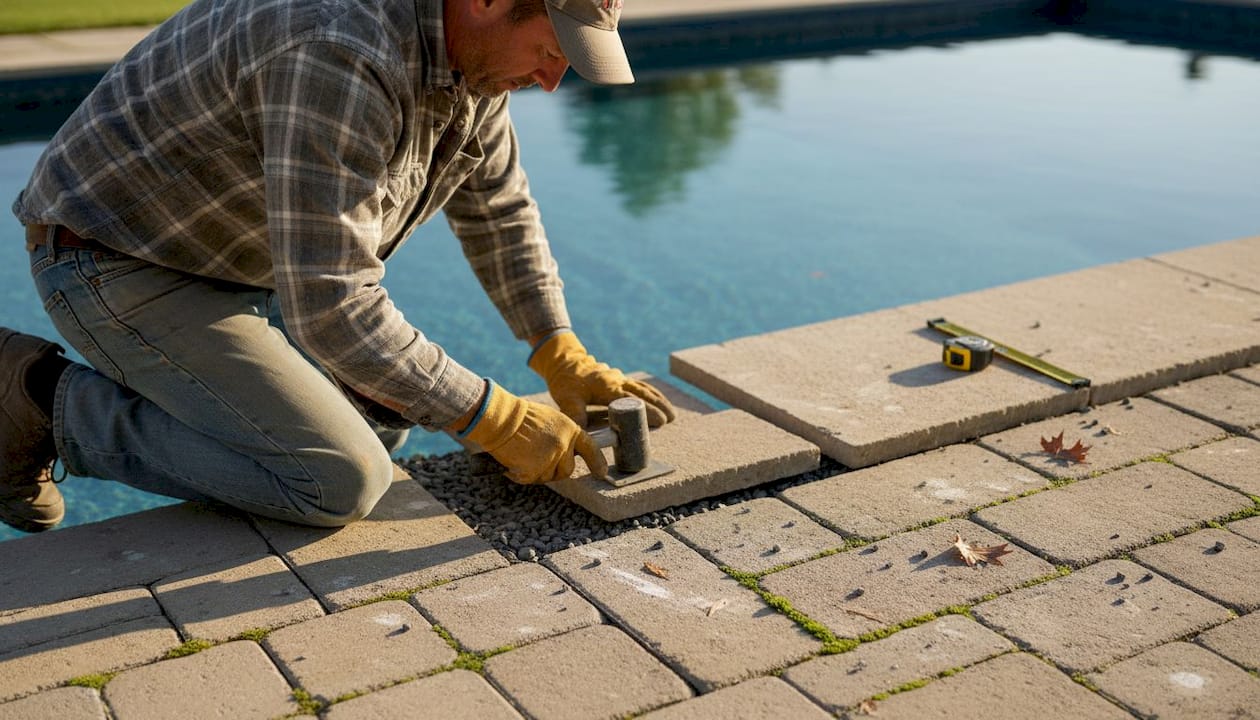
Pavers and natural stone like Indiana limestone offer low-maintenance, slip-resistant, durable options suited to Indiana’s freeze-thaw cycles. Indiana limestone in particular is a regional standout because it’s locally sourced, naturally textured for grip, and ages well through temperature swings.
| Material | Slip resistance | Freeze-thaw durability | Heat absorption | Maintenance | Relative cost |
|---|---|---|---|---|---|
| Indiana limestone | Excellent | Excellent | Low to moderate | Very low | Moderate |
| Concrete pavers | Good | Good (with proper base) | Moderate | Low | Low to moderate |
| Poured concrete | Moderate | Fair (can crack) | High | Moderate | Low |
| Composite decking | Good | Good | Moderate | Low | Moderate to high |
| Natural wood decking | Fair | Poor | Low | High | Moderate |
For a detailed side-by-side look, our guide to concrete vs pavers for pools breaks down costs, installation, and long-term performance across Indiana conditions.
Key considerations when selecting poolside hardscape:
- Choose textured or brushed finishes over smooth surfaces to reduce slip risk when wet
- Lighter-colored materials stay cooler underfoot on hot Indiana summer days
- Properly installed pavers with polymeric sand joints resist freeze-thaw movement far better than a single poured slab
- Low-maintenance pool decks typically use permeable or jointed systems that allow water to drain rather than pool on the surface
Wood decking looks appealing in photos, but Central Indiana’s humidity cycles and freeze-thaw winters accelerate rot, warping, and splinter risk. If you love the wood aesthetic, a composite product gives you the look without the seasonal maintenance burden.
Statistic: Up to 90% of freeze-thaw damage to pool decks is preventable with correct grading, a compacted gravel base, and the right material selection from the start.
Smart design ideas for function, play, and safety
Great materials and plants only reach their potential when paired with thoughtful design. Here’s how to bring everything together for fun and peace of mind.
Design is where the whole project either clicks or feels like an afterthought. For Central Indiana families, the layout needs to work for kids playing, adults relaxing, and safe daily supervision.
Drainage comes first. Proper drainage requires a 6-inch drop in the first 10 feet from structures, and you should avoid dense plantings at the pool edge that can act as a dam. In clay soil, this matters even more because water sits rather than soaks in.
Here are numbered design priorities that consistently work for Central Indiana families:
- Grade away from the pool: Confirm that your yard slopes away from the pool structure so rain and splash water drain toward lawn or garden areas, not under your deck.
- Create a multi-use patio zone: A paved area adjacent to the pool doubles as a play zone, dining space, and fire pit area. Family pool project ideas often show how a connected patio extends the usable season well into fall.
- Use shrubs and screens for privacy: Arborvitae rows or lattice screens on the north and west sides block wind and neighbor views without closing off sight lines from the house.
- Install pool safety fencing early: Pool safety fencing is non-negotiable for families with young children, and integrating it into your landscape plan from day one keeps it looking intentional rather than bolted-on.
- Add a sun shelf to your pool design: Geometric pool shapes with sun shelves suit families perfectly, and darker interior finishes help reduce algae growth, cutting down on chemical maintenance.
- Plan lighting for evening use: Low-voltage landscape lighting along paths and in plantings extends your family’s outdoor time and improves safety without adding ongoing maintenance.
Pro Tip: Use deep-rooted native plants like switchgrass and little bluestem along the outer edges of your yard. Their root systems actively break up clay soil over time and dramatically reduce erosion after heavy Indiana rains.
Incorporating a pool shape selection process early helps you align the pool’s footprint with your drainage plan, patio layout, and planting zones before any ground is broken.
Perspective: What most pool landscaping advice gets wrong in Indiana
With so many trends online, it helps to know what really works for Indiana families. Here’s our unvarnished take after more than four decades building pools across Central Indiana.
Most national pool landscaping content is written for climates that simply don’t match what you’re dealing with here. Articles pushing tropical plantings, ornate wooden pergolas, or sprawling shade trees near pool edges look great in Florida or Southern California. In Indiana, those choices create expensive problems within a few seasons.
The real priority is resilience. Evergreens and regionally-adapted grasses outlast flashy seasonal plantings year after year, and they don’t drop leaves into your pool every October. Hardscapes built on proper bases with freeze-thaw-rated materials stay level and safe. Wooden decks, despite their appeal, consistently underperform in Indiana’s humidity and temperature swings.
We also see families underestimate layout. Open sight lines from your kitchen or family room to the pool are not just nice to have. They’re how you supervise children safely without being in the water yourself. A beautifully planted pool that blocks your view from the house is a liability, not an asset.
Focus on why inground pools in Indiana succeed long-term: low-litter plants, slip-resistant hardscapes, and layouts built around real family use. That’s the combination that works here.
Ready to make your Central Indiana poolscape easy and beautiful?
If you’re ready to put these ideas into action, here’s how to get started with expert guidance and local examples.
At Pools of Fun, we’ve been designing and building backyards across Central Indiana since 1981, and we know what works in this climate for real families. Our outdoor living inspiration hub is a great starting point to browse design ideas, gallery photos, and layout concepts that translate directly to Indiana conditions.
For plant-specific guidance and project examples close to home, our collection of expert pool landscaping tips covers everything from plant placement to drainage best practices. You can also see the Lux poolscape for a real Central Indiana example of how hardscape, planting, and pool design come together beautifully. Contact us today for a free consultation and let’s start designing your backyard.
Frequently asked questions
What pool landscaping ideas require the least maintenance in Indiana?
Native plants, evergreens, and stone or paver hardscaping need the least upkeep in Central Indiana’s climate because they’re adapted to local conditions and require minimal seasonal intervention.
Which poolside plants are safe for families and pets?
Shrubs like hydrangea and shrub rose, groundcovers like ajuga, and perennials such as coneflower are safe, accessible options that keep pool edges tidy and open for daily family use.
How much does pool landscaping add to the cost of a new pool?
Landscaping can add $5,000 to $15,000 to your project total, especially when integrating fencing, grading, and drainage solutions suited to Indiana conditions.
Do I need special drainage for pool landscaping in Central Indiana?
Yes. A 6-inch drop within the first 10 feet from pool structures is essential to prevent water pooling, freeze-thaw damage, and erosion in Central Indiana’s clay-heavy soils.
Recommended
- 6 Tips for Landscaping Around a New Pool – Pools of Fun
- Designing the Ultimate Family-Friendly Pool – Pools of Fun
- Five Landscaping Tips to Enhance Your Pool – Pools of Fun Owner Community
- Backyard Makeovers: Why You Should Consider One – Pools of Fun
- 7 Smart Tips for Gardening in Small Spaces in Melbourne – Onyx Removals