TL;DR:
- Fiberglass pools are the easiest to maintain, requiring only 15-20 minutes weekly and resisting algae.
- They handle Indiana’s climate better with no resurfacing needed over their lifespan, offering long-term savings.
- Choosing a well-designed fiberglass pool with thoughtful placement and features minimizes ongoing maintenance efforts.
Indiana’s clay-heavy soil, harsh freeze-thaw winters, and unpredictable summer storms make pool ownership more demanding than in most states. For busy Central Indiana families, the wrong pool choice can turn your backyard retreat into a weekend chore list. The good news is that selecting the right pool type, paired with smart design choices, can cut your weekly maintenance time to under 20 minutes. This guide walks you through how to evaluate your options, what each pool type really costs in time and money, and which solution fits best into a custom outdoor living space you’ll actually use.
Table of Contents
- How to evaluate a low-maintenance pool
- Fiberglass pools: The gold standard for easy ownership
- Vinyl and concrete pools: Weighing regular care and costs
- Natural pools and saltwater systems: Are they low maintenance here?
- Head-to-head: Which pool is truly low maintenance for Indiana homes?
- Our perspective: Easy pools are designed, not just installed
- Design your low-maintenance pool with local experts
- Frequently asked questions
Key Takeaways
| Point | Details |
|---|---|
| Fiberglass pools lead for low effort | Fiberglass pools demand less cleaning, fewer chemicals, and minimal repair, making them ideal for Indiana families. |
| Upfront design matters | A pool’s ease of care depends as much on planning and features as on the pool type chosen. |
| Saltwater = less hands-on work | Saltwater systems automate chlorine control, reducing chemical handling for busy owners. |
| Vinyl and concrete need more maintenance | Vinyl liners and concrete shells require more regular upkeep, repairs, and long-term investment. |
How to evaluate a low-maintenance pool
The phrase “low maintenance” gets used loosely in the pool industry. For Central Indiana homeowners, it needs to mean something specific: less time skimming and scrubbing, fewer chemicals to balance, lower repair bills, and a pool that survives Indiana winters without expensive damage.
Here’s what to look at when evaluating any pool for true ease of ownership:
- Surface type: Smooth, non-porous surfaces resist algae and require less scrubbing than rough or porous ones.
- Chemical needs: Some pool surfaces demand more frequent chemical adjustments to stay balanced and safe.
- Winter care: Pool winterization in Indiana is non-negotiable. All pools in Central Indiana require winterization, but some pool types handle the freeze-thaw cycle far better than others.
- Ongoing repair costs: Liner replacements, resurfacing, and crack repairs add up fast over a decade.
- Design impact on cleaning: Pool shape, surrounding decking, and landscaping all affect how much debris collects and how easy it is to clean.
Local conditions matter more than most homeowners realize. Indiana’s clay soil shifts seasonally, which puts pressure on rigid pool structures. Sunlight exposure affects algae growth. Poor yard drainage can compromise your pool’s foundation over time.
Pro Tip: Before committing to any pool type, ask your builder to evaluate your specific yard, including drainage patterns, sun exposure, and how your family plans to use the space. A pool that works perfectly in Arizona may be a maintenance headache in Carmel or Fishers.
With criteria in hand, explore top pool types considered for Central Indiana.
Fiberglass pools: The gold standard for easy ownership
If low maintenance is your top priority, fiberglass pools are the clear front-runner. The smooth gelcoat surface is non-porous, which means algae has nowhere to grip. Less algae means less scrubbing, fewer algaecide treatments, and a noticeably cleaner pool week after week.
The numbers back this up. Fiberglass pools use 30% less chlorine than other pool types and require only 15 to 20 minutes of maintenance per week on average. For a family juggling school schedules, work, and weekend activities, that difference is significant.
Fiberglass also handles Indiana’s climate better than concrete. The shell flexes slightly under freeze-thaw pressure, which dramatically reduces cracking compared to rigid concrete structures. Clay soil movement is less likely to cause structural damage over time.
Key advantages for Central Indiana families:
- Installation typically takes 3 to 5 weeks, compared to 3 to 6 months for concrete
- No resurfacing required over the pool’s lifespan
- Built-in features like tanning ledges and bench seating integrate naturally with outdoor living areas
- Long-term savings are substantial: fiberglass saves $80,000 to $120,000 versus concrete pools over 25 years
| Feature | Fiberglass | Vinyl | Concrete |
|---|---|---|---|
| Weekly maintenance time | 15–20 min | 30–45 min | 45–60 min |
| Resurfacing needed | No | Liner replacement | Yes, every 10–15 yrs |
| Algae resistance | High | Medium | Low |
| Freeze-thaw durability | Excellent | Good | Fair |
| Long-term cost | Lowest | Medium | Highest |
Learn more about the fiberglass pool install process to understand what the timeline looks like from design to swim-ready.
Pro Tip: Pair your fiberglass pool with a saltwater chlorination system. It automates chlorine production, softens the water noticeably, and reduces the chemical handling that most families find tedious.
For comparison, let’s break down two other commonly chosen backyard pool types.
Vinyl and concrete pools: Weighing regular care and costs
Vinyl liner pools appeal to many Indiana homeowners because the upfront cost is lower than fiberglass or concrete. That initial savings is real, but it comes with trade-offs that show up over time.
The liner itself is the main issue. Vinyl liners need replacement every 8 to 12 years, and each replacement runs $4,000 to $8,000 depending on pool size and liner quality. The liner surface also requires more frequent brushing than fiberglass, and it is vulnerable to punctures from sharp toys, pet claws, or storm debris. A punctured liner can mean an early replacement.
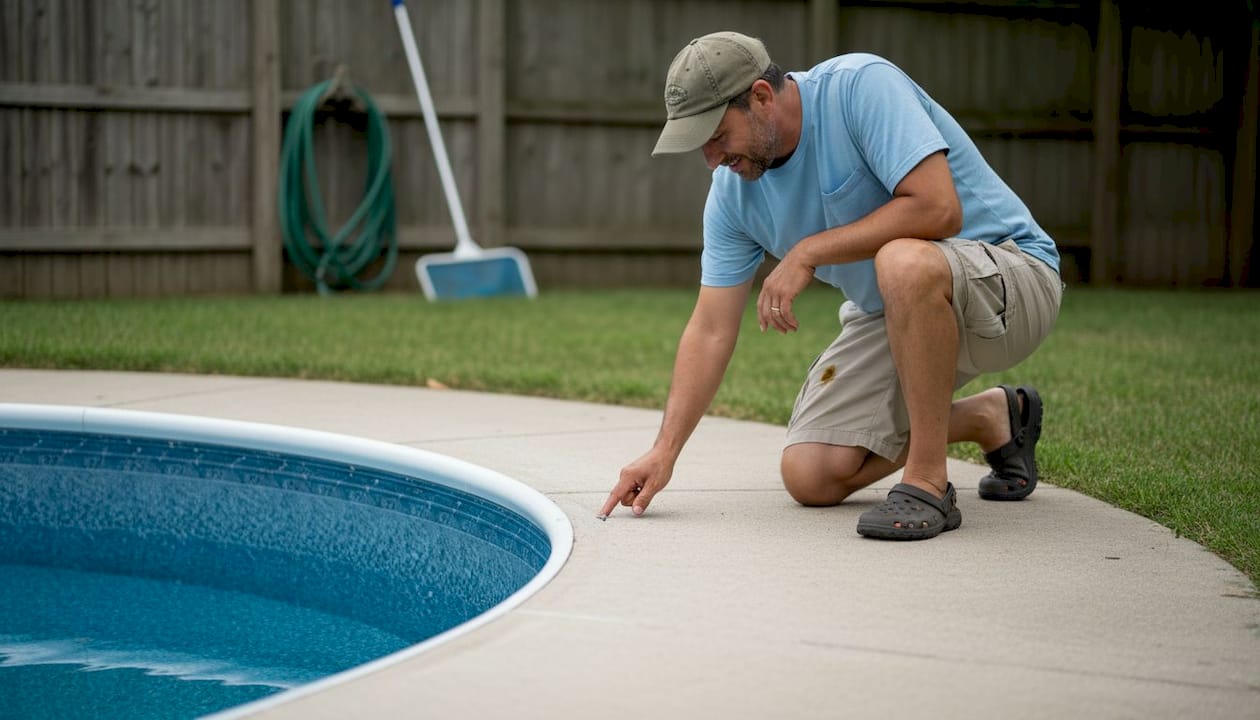
For vinyl pool upkeep, expect to spend more time on water chemistry as well. The liner surface does not resist algae as effectively as fiberglass gelcoat, so you may find yourself adding chemicals more often during hot Indiana summers.
Concrete pools offer the most design flexibility, but they come with the highest ongoing maintenance demands. Concrete pools need acid washing every 3 to 5 years and full resurfacing every 10 to 15 years. The rough surface is a breeding ground for algae, which means more brushing and heavier chemical use year-round.
What to expect with concrete pool ownership:
- Brushing required 2 to 3 times per week to prevent algae buildup
- Higher chemical costs due to porous surface absorption
- Resurfacing costs range from $10,000 to $20,000 or more
- Concrete pool maintenance can exceed $15,000 over 10 years when factoring in acid washes, repairs, and resurfacing
If you are comparing your options side by side, the vinyl vs fiberglass breakdown covers the full picture in detail. Concrete makes sense only when design customization is your absolute top priority and you are prepared for the ongoing investment of time and money.
But what about more natural, eco-friendly pool options for Central Indiana?
Natural pools and saltwater systems: Are they low maintenance here?
Natural pools, sometimes called swimming ponds, use biological filtration instead of chemicals. Plants and microorganisms do the work that chlorine normally handles. The appeal is obvious: no chemicals, a naturalistic look, and a unique backyard feature.
The reality for Indiana families is more complicated. Natural pools need a larger zone for the regeneration area, require consistent pump monitoring, and are genuinely rare in Indiana. They are best suited for homeowners who enjoy hands-on gardening-style care, not families looking to minimize effort. The natural aesthetic also does not always blend well with sleek, modern outdoor living spaces that include patios, outdoor kitchens, and contemporary fencing.
Saltwater systems are a different story. These are not chemical-free pools, but they automate chlorine production through a process called electrolysis, which converts dissolved salt into chlorine continuously. The result is softer water, less manual chemical handling, and a more consistent chemical balance.
What you should know about saltwater systems:
- Salt cell replacement costs $400 to $1,500 and is needed every 3 to 7 years
- Saltwater systems reduce chemical handling but still require regular inspection and water testing
- They pair best with fiberglass pools because the smooth surface resists the mild corrosive effect of saltwater better than concrete or vinyl
- Initial installation adds $1,500 to $3,000 to your pool project
For guidance on natural pool feasibility in Indiana and whether it fits your property, a local expert consultation is the most reliable starting point.
Pro Tip: Saltwater is a meaningful upgrade for reducing weekly effort, but no pool system is truly maintenance-free. Budget for occasional salt cell inspections and keep a basic water testing kit on hand.
To help you weigh these options, let’s compare maintenance data side-by-side.
Head-to-head: Which pool is truly low maintenance for Indiana homes?
After reviewing each pool type, the comparison comes down to three factors that matter most to busy Central Indiana families: time, cost, and durability under local conditions.
| Pool type | Annual maintenance cost | Weekly time | Resurfacing or liner cost | Indiana climate suitability |
|---|---|---|---|---|
| Fiberglass | $800–$1,200 | 15–20 min | None required | Excellent |
| Vinyl liner | $1,000–$1,500 | 30–45 min | $4,000–$8,000 every 8–12 yrs | Good |
| Concrete | $1,200–$1,800 | 45–60 min | $10,000–$20,000 every 10–15 yrs | Fair |
| Natural pool | Variable | High | N/A | Limited |
Key takeaways for Central Indiana homeowners:
- Fiberglass is the best choice for low maintenance, fast installation, and seamless integration with custom outdoor living spaces. Over 25 years, fiberglass saves $80,000 to $120,000 versus concrete.
- Vinyl works if upfront budget is your primary constraint, but plan for active involvement and liner replacement costs down the road.
- Concrete is worth considering only when fully custom shapes or features are non-negotiable and you accept the higher ongoing investment.
- Natural pools suit a niche audience and are not practical for most Indiana families seeking a low-effort backyard solution.
For most busy families in Central Indiana, a fiberglass pool paired with a saltwater system delivers the best balance of ease, durability, and long-term value. Browse vinyl pool options or explore fiberglass pool benefits in detail to confirm which direction fits your goals.
Having reviewed the main options, let’s close with our expert take from years of experience.
Our perspective: Easy pools are designed, not just installed
After more than four decades building pools across Central Indiana, we have seen a consistent pattern: the homeowners who spend the least time on maintenance are not always the ones who chose the most advanced pool shell. They are the ones who invested in thoughtful design from the start.
Placement matters. A pool positioned to minimize leaf fall from nearby trees will stay cleaner with far less effort. Built-in benches and tanning ledges reduce the need for loose furniture that collects debris. Covered equipment access makes routine checks faster. Auto-covers, while an added cost upfront, cut evaporation, reduce chemical loss, and keep the pool cleaner between uses.
Landscaping is one of the most overlooked factors in pool maintenance. Smart landscaping tips for pools can dramatically reduce debris, improve drainage, and create a finished outdoor living space that requires less upkeep overall.
The classic mistake we see is over-customizing with concrete because the design possibilities feel exciting. But every additional curve, ledge, and textured surface in a concrete pool adds brushing time and chemical demand for the life of the pool. A well-designed fiberglass pool with the right surrounding features will outperform a heavily customized concrete pool on every maintenance metric, year after year.
Think of the pool as one component of a complete outdoor living system. When the whole space is designed with ease in mind, maintenance becomes a minor part of your routine rather than the dominant one.
Design your low-maintenance pool with local experts
Choosing the right pool type is just the beginning. The real difference comes from working with a builder who understands Central Indiana’s soil, climate, and the way families actually use their outdoor spaces.
At Pools of Fun, we have been designing and building custom pools for Indiana families since 1981. From fiberglass shells to complete backyard transformations, we handle every detail so you can focus on enjoying the result. Explore our custom pool projects for real backyard inspiration, learn why Pools of Fun is Indiana’s most trusted builder, and discover how we approach complete backyard living from pool to patio to outdoor kitchen. Contact us for a free consultation and let’s design a space your family will use for decades.
Frequently asked questions
What is the easiest pool to maintain in Central Indiana?
Fiberglass pools are the easiest to maintain because their non-porous gelcoat surface resists algae, and they need 30% less chlorine with only 15 to 20 minutes of weekly upkeep. Their smooth surface and freeze-thaw flexibility make them particularly well suited for Indiana conditions.
How long does installing a low-maintenance pool take?
Fiberglass pools install in 3 to 5 weeks, making them far faster than concrete pools, which typically take 3 to 6 months from excavation to first swim. That faster timeline means your family gets in the water sooner with less disruption to your yard.
Are saltwater pools really lower maintenance?
Saltwater systems do reduce the hands-on chemical work by automating chlorine production, but they are not maintenance-free. The salt cell requires replacement every 3 to 7 years and regular inspection to keep the system running efficiently.
Do natural pools need less upkeep than traditional pools in Indiana?
Natural pools use biological filtration instead of chemicals, but they need a larger zone, ongoing pump care, and are rarely built in Indiana. For busy families, they typically require more hands-on management than a fiberglass pool with a saltwater system.
How much can I expect to spend maintaining a pool in Indiana?
Fiberglass pools generally cost $800 to $1,200 per year to maintain, while concrete pools run closer to $1,200 to $1,800 annually before factoring in resurfacing. Vinyl liner pools fall in between but add significant cost when liner replacement is due every 8 to 12 years.
Recommended
- Why Inground Pools Are the Top Choice for Indiana Backyards – Pools of Fun
- Fiberglass vs Vinyl Liner Pools Indianapolis Guide: Which Is Right for Your Backyard? – Pools of Fun
- Who are the best pool builders in Indiana – Pools of Fun Owner Community
- Weekly Pool Care Packages | Hassle-Free Maintenance