TL;DR:
- Everything you need to know about winter pool care
- Proper winterizing involves water balancing, equipment protection, line blowing, and cover installation.
- Regular checks of the cover, water levels, and ground conditions help prevent costly damage.
- Solid safety covers are recommended for harsh winters to provide maximum protection and ease of spring opening.
Central Indiana winters are unpredictable. One week brings mild temperatures, and the next delivers a hard freeze that can crack pool walls, burst pipes, and damage equipment worth thousands of dollars. If you own an in-ground pool, the decisions you make in fall and early winter directly affect what you find when you pull back the cover in spring. Skipping steps or rushing through the process often means expensive repairs before you even get to enjoy the warm season.
This guide walks you through everything you need know about winter pool care, from how to protect your pool and choosing the right cover, to keeping your outdoor living space functional and inviting all winter long.
Table of Contents
- How to prepare your pool for winter
- Routine winter maintenance and monitoring
- Choosing the right pool cover: A winter protection comparison
- Enhancing your outdoor living space during winter
- Why most homeowners underestimate winter pool care
- Discover professional pool services and outdoor solutions
- Frequently asked questions
Key Takeaways About Winter Pool Care
| Point | Details |
|---|---|
| Winterization essentials | Properly closing your pool and storing equipment prevents freeze damage and costly repairs. |
| Routine checks matter | Monthly inspections and care keep your pool safe and ready for spring. |
| Best cover for snow | Solid safety covers provide reliable winter protection in Central Indiana. |
| Outdoor enjoyment | Creative upgrades make your backyard inviting even during cold months. |
How to prepare your pool for winter
Winterizing your pool is not a single task. It is a sequence of steps, and the order matters. Skipping one can undo the others. Follow this process before temperatures in Central Indiana drop below freezing.
- Clear debris and balance water chemistry. Remove all leaves, dirt, and organic material from the water and pool surfaces. Then test and adjust your pH (target 7.2 to 7.6), alkalinity (80 to 120 ppm), and calcium hardness (200 to 400 ppm). Balanced water prevents corrosion and scaling while the pool sits idle. Add a winterizing algaecide and shock treatment to keep the water clean through the off-season.
- Lower the water level. Drop the water level below the skimmer opening, typically 4 to 6 inches below the tile line for solid covers and 12 to 18 inches for mesh covers. This protects the skimmer from freeze damage and gives the cover room to sit properly.
- Drain and protect your equipment. Your pump, filter, and heater are the most vulnerable components. Following solid freeze protection advice, you should drain, store equipment like the pump, filter, and heater indoors or insulate it, then disconnect and protect everything from freeze damage. Store removable equipment in a dry, temperature-controlled space like a garage or basement.
- Blow out the plumbing lines. Use a shop vac or air compressor to force all water out of the return and suction lines. Standing water in pipes will freeze and expand, causing cracks that are costly to repair. Insert winterizing plugs into each line after blowing them out.
- Install your winter cover. Choose a cover appropriate for your pool type and local conditions (more on this in the next section). Secure it tightly using water bags, anchors, or cable systems so wind cannot lift it.
Freeze damage is one of the most common and preventable causes of pool repair in Indiana. A thorough closing process, including proper equipment storage and line protection, is your first line of defense against a costly spring surprise. Following pool winterization best practices is not optional. It is essential.
Review the full winter pool care guidelines to make sure you have covered every step before the first hard freeze arrives.
Routine winter maintenance and monitoring
Closing your pool correctly is a strong start, but your job does not end there. Indiana winters bring heavy snowfall, ice accumulation, and temperature swings that can stress even a well-closed pool. Staying on top of a few simple tasks throughout the season makes a real difference.
- Check your cover regularly. After every major snowfall or ice event, inspect your cover for sagging, tears, or displaced anchors. A cover weighed down by standing water or heavy snow can stretch, shift, or collapse into the pool. Remove excess water with a submersible pump and carefully clear snow with a soft-bristled broom.
- Monitor the water level. Even a closed pool can lose water through evaporation or minor leaks. If the water level drops too low, the walls and floor can shift or crack under the weight of frozen ground. Check the level once a month and add water if needed.
- Inspect for equipment leaks or movement. Walk around the pool area and look for signs of water seeping from plugged lines, shifting coping stones, or frost heave (ground movement caused by freezing soil) near the pool walls. Catching these issues early prevents much larger problems in spring.
- Keep outdoor pathways clear. Snow and ice around your pool deck create slip hazards. Regularly clear walkways and treat surfaces with pet-safe ice melt to keep your yard safe for family and neighbors.
Pro Tip: Set monthly calendar reminders from November through March to do a quick 15-minute pool check. Consistent checking on winterized pools takes very little time but catches problems before they grow. Knowing when to winterize and sticking to a schedule all season long is what separates homeowners who open their pools stress-free from those who face major repairs.
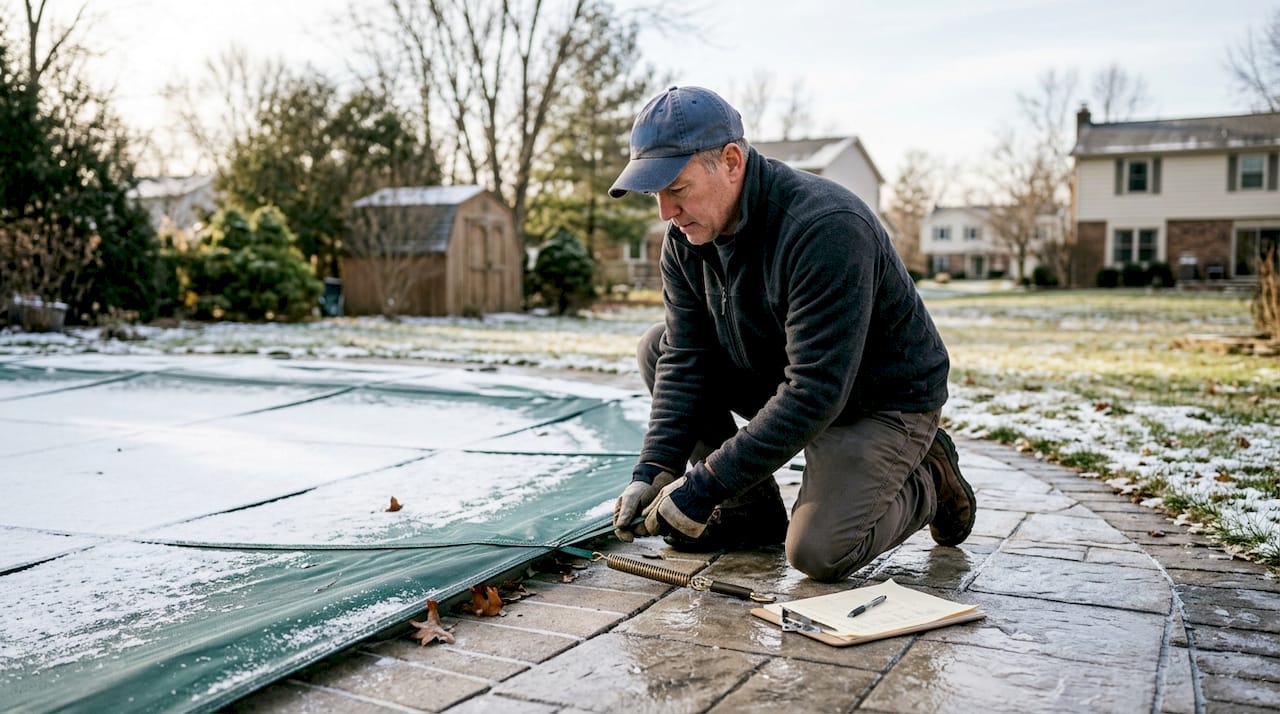
For a full breakdown of seasonal tasks, the winter pool maintenance tips resource covers everything you need month by month. Staying consistent with pool closing services and follow-up care is the most reliable way to protect your investment.
Choosing the right pool cover: A winter protection comparison
Not all pool covers are created equal, and the right choice depends on your budget, pool type, and how severe your winters tend to be. Here is a breakdown of the three most common options.
| Cover type | Durability | Price range | Ease of use | Safety rating |
|---|---|---|---|---|
| Tarp cover | Low to medium | $ | Easy | Low |
| Mesh safety cover | Medium to high | $$ | Moderate | High |
| Solid safety cover | High | $$$ | Moderate | High |
Tarp covers are the most affordable option. They block debris and sunlight but offer limited structural support. Heavy snow or ice can cause them to sag into the water, and they provide no safety barrier for children or pets.
Mesh safety covers are anchored to the pool deck and allow rainwater and snowmelt to drain through. They are durable, safer than tarps, and easier to remove in spring. However, fine debris and algae spores can still pass through the mesh.
Solid safety covers offer the strongest all-around protection. They block debris, sunlight, and water infiltration entirely. They are the best choice for Central Indiana’s harsh winters because they handle heavy snow loads and keep water chemistry more stable over the long off-season.
- Tarp covers require a water pump on top to remove pooled water after rain or snowmelt
- Mesh covers drain naturally but may need more aggressive spring cleaning
- Solid covers need a pump for meltwater but protect water quality most effectively
Pro Tip: Invest in a reinforced solid safety cover with anchored straps if your yard is exposed to strong winds or if you have children and pets. The upfront cost is higher, but it pays for itself by reducing spring cleanup time and protecting against liability. Review secure pool area tips and equipment storage advice to round out your protection plan. Proper cover maintenance guidance ensures your cover lasts multiple seasons.
Enhancing your outdoor living space during winter
Just because the pool is closed does not mean your backyard has to go dormant. Many Central Indiana homeowners are discovering that thoughtful upgrades make outdoor spaces enjoyable well past Labor Day. In fact, outdoor living enhancements have become one of the fastest-growing categories in home improvement, with more families choosing to winterize outdoor amenities rather than abandon them entirely.
Here are some popular ways to keep your backyard active through the colder months:
- Outdoor fire features. A fire pit or outdoor fireplace creates warmth and ambiance. Gas-powered options are especially convenient and can be used even on cold evenings.
- Heated patio systems. Infrared or propane patio heaters extend comfortable outdoor time significantly. Some homeowners install permanent overhead heating systems for covered patios.
- Landscape lighting. Low-voltage LED lighting along pathways, garden beds, and pool surrounds adds visual appeal and safety during the shorter winter days.
- Hot tubs. A hot tub is one of the most rewarding additions for winter use. It provides year-round enjoyment and adds value to your property. Browse hot tub options to find a model suited to your space and budget.
- Landscaping updates. Winter is a great time to plan and install evergreen plantings, decorative stone, or raised garden beds that improve curb appeal year-round.
| Upgrade | Estimated cost | Enjoyment value |
|---|---|---|
| Fire pit | $500 to $2,500 | High |
| Patio heater | $200 to $800 | Medium to high |
| Landscape lighting | $300 to $1,500 | Medium |
| Hot tub | $5,000 to $12,000 | Very high |
| Evergreen landscaping | $500 to $3,000 | Medium |
Exploring outdoor living ideas and reviewing pool landscaping tips can help you prioritize upgrades that deliver the most value for your specific yard. You can also enhance your pool landscaping with plantings and features that look great in every season.
Why most homeowners underestimate winter pool care
After more than four decades of helping Central Indiana families care for their pools, we have seen the same pattern repeat itself. Homeowners invest heavily in their pool during the summer, then treat winter as a pause button. They close the pool quickly, skip a few steps, and assume everything will be fine until spring. It rarely is.
The truth is that winter is when your pool is most vulnerable. Freeze-thaw cycles, ground movement, and standing water in lines do more structural damage than a full summer of use. The homeowners who open their pools in the best condition every spring are not the ones who did the most dramatic repairs. They are the ones who followed a year-round pool care calendar and stayed consistent.
Small, regular actions beat seasonal panic every time. A 15-minute monthly check is worth more than a full day of emergency repairs in April. Adopt the mindset that winter maintenance is just as important as summer maintenance, and your pool will reward you with a longer lifespan and fewer surprises.
The best winter pool care is steady, not heroic. Consistent small steps protect your investment far better than reactive fixes after damage has already occurred.
Winter Pool Care 101: Discover professional pool services and outdoor solutions
Ready to take the guesswork out of winter pool care? At Pools of Fun, we have been helping Central Indiana homeowners protect and enhance their backyard investments since 1981. Our certified team handles everything from professional pool closing services to year-round maintenance, so you can enjoy peace of mind all season long.
Browse our Hough pool portfolio for design inspiration, or explore our full range of complete backyard experiences including patios, outdoor kitchens, and landscaping. Whether you need a professional closing, a cover upgrade, or want to add a hot tub for winter enjoyment, we are your one-stop resource for everything backyard in Central Indiana. Contact us today to schedule a consultation or visit one of our five retail locations.
Frequently asked questions about winter pool care
When should I start winterizing my pool in Central Indiana?
Begin the process when daytime temperatures consistently drop below 60°F, typically in late September or October. Starting early gives you time to balance water chemistry and protect equipment from freeze before the first hard frost arrives.
What is the best pool cover for harsh winters?
A solid safety cover provides the strongest protection against debris, heavy snow loads, and freezing conditions. It also keeps water chemistry more stable than tarp or mesh alternatives, making spring opening much easier.
Do I need to check my pool during the winter months?
Yes. Monthly inspections help you catch cover damage, water level drops, and early signs of freeze stress before they become costly repairs. A quick visual check once a month is all it takes to stay ahead of problems.
Can I use my outdoor living space during winter?
Absolutely. Features like fire pits, patio heaters, and hot tubs make your backyard enjoyable even in cold weather. Many Central Indiana homeowners find that the right upgrades actually make winter their favorite time to spend time outside.